Today's
EarthStation1.com 15% (Or More!) Off Commemorative Memorial Title:
In Heaven There Is No Beer Polka Culture USA MP4 Video Download
DVD
Today, September 28, 2026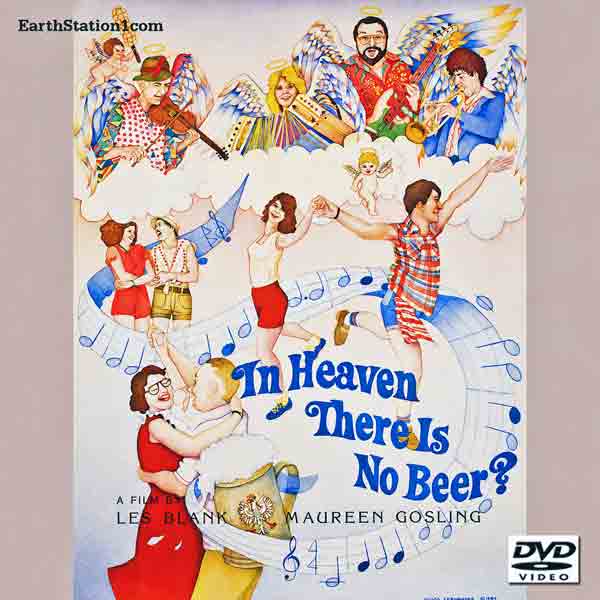
September 28: National Drink Beer Day: --
An annual toast to the great malt elixir! Just as the Oktoberfest
season comes to an end, the day reminds us to enjoy the world's
most popular adult beverage. Beer lovers have more selection than
ever before in the ale and lager market. An explosion in the craft
beer industry keeps the competition and the flavors robust,
churning out new flavors seasonally. Beer connoisseurs quench
their thirst with flavors drastically different from their
grandfather's beers. Rootbeer to raspberry, caramel, and hints of
herbs all tickle the palate when it comes to artisanal beers.
However, you don't have to drink a special brew to celebrate the
day. Drink your favorite stand by or branch out - whichever you
prefer. Around the country, and from around the world, a wide
assortment of beers offers plenty of ways to celebrate. Whether
you call your mug full of brew a barley pop or cerveza, the day is
worth celebrating. To observe National Drink Beer Day: The best
way to celebrate is by enjoying a glass of beer! As always,
celebrations are better when surrounded by others who celebrate
with you. So, invite friends, family, coworkers, too. Join them at
a local pub or tavern. Or invite them to your home. Another way to
celebrate includes recognizing your servers, bartenders and
brewers. Celebrate them with a toast as you take your first frothy
sip. No matter how you #CelebrateEveryDay, drink responsibly and
use #DrinkBeerDay when posting on social media. As for the origin
of this delicious beverage holiday, it's interesting to note it
lands on the birth of Arthur Guinness, the founder of Guinness
Brewery. On Sale Until Midnight Tonight PT!
https://store.earthstation1.com/in-heaven-there-is-no-beer-polka-culture-usa-mp4-video-download-dv4.html
Today's
EarthStation1.com 15% (Or More!) Off Commemorative Memorial Title:
The Genius That Was China Documentary Series DVD, Download, USB
Drive
Today, September 28, 2026
September 28: Teachers' Day: -- September
28, 551 BC: #BOTD: #HBD! Confucius, Chinese teacher, editor,
politician, and philosopher of the Spring and Autumn period of
Chinese history (d. c. 479 BC) is #born Kong Qiu in Zou, State of
Lu (modern-day Nanxin, Qufu, Shandong, China). It is also
Teachers' Day, in Taiwan and Chinese-Filipino schools in the
Philippines, when ceremonies dedicated to Confucius are also
observed. He was a Chinese teacher, editor, politician, and
philosopher of the Spring and Autumn period of Chinese history, a
period in Chinese history from approximately 771 to 476 BC (or
according to some authorities until 403 BC which corresponds
roughly to the first half of the Eastern Zhou Period. The period's
name derives from the Spring and Autumn Annals, a chronicle of the
state of Lu between 722 and 479 BC, which tradition associates
with Confucius (551-479 BC). The philosophy of Confucius
emphasized personal and governmental morality, correctness of
social relationships, justice and sincerity. His followers
competed successfully with many other schools during the Hundred
Schools of Thought era only to be suppressed in favor of the
Legalists during the Qin Dynasty. Following the victory of Han
over Chu after the collapse of Qin, Confucius' thoughts received
official sanction and were further developed into a system known
in the West as Confucianism. Confucius is traditionally credited
with having authored or edited many of the Chinese classic texts
including all of the Five Classics, but modern scholars are
cautious of attributing specific assertions to Confucius himself.
Aphorisms concerning his teachings were compiled in the Analects,
but only many years after his death. Confucius' principles had a
basis in common Chinese tradition and belief. He championed strong
family loyalty, ancestor veneration, and respect of elders by
their children and of husbands by their wives. He also recommended
family as a basis for ideal government. He espoused the well-known
principle "Do not do to others what you do not want done to
yourself", the Golden Rule. Confucius is also a traditional
deity in Daoism. Burdened by the loss of both his son and his
favorite disciples, he died at the age of 71 or 72 from natural
causes. Confucius was buried on the bank of the Sishui River, to
the north of Qufu City in Shandong Province. Starting as a humble
tomb, the cemetery of Confucius had been expanded by emperors
since the Han Dynasty. To date, The Cemetery Of Confucius covers
an area of 183 hectares with more than 100,000 graves of his Kong
family descendants. It is included in the World Heritage List for
its cultural and architectural value. On Sale Until Midnight
Tonight PT!
https://store.earthstation1.com/the-genius-that-was-china-dvd-tv-documentary-series-2-disc-se2.html
Today's
EarthStation1.com 15% (Or More!) Off Commemorative Memorial Title:
In The Suburbs: Life In Suburbia Films DVD, Video Download, USB
Drive
Today, September 28, 2026
September 28: National Good Neighbor Day:
-- An opportunity for neighbors to get to know each other better!
This day acknowledges and celebrates the importance of a good
neighbor. It is a blessing to have a good neighbor, but it is even
a greater thing to BE a good neighbor. Good neighbors often become
friends. They watch out for each other, lend a helping hand, and
are there for advice when asked. Neighbors offer that cup of sugar
when we are short, collect our mail when we are on vacation, watch
our homes, and sometimes watch our children and our pets. Simply
put, being a good neighbor makes good neighbors and develops
lifelong friendships. Good-neighborliness defines how pleasant and
comfortable our neighborhood is - neighbors can make or break your
experience of living in an area. Being a good neighbor helps us
build solid and long-lasting relationships. Neighbors are like
umbrellas on a rainy day, lending a helping hand in times of
emergency. Previous generations tended to engage their neighbors
in a lot of activities. They invited them to parties and balls,
went riding with them, worked on their farms, invited them over
for dinner, and took care of their homes whenever they went away.
Nowadays, with busy schedules and technological advancements, we
never really care much about or show interest in the family next
door. This is why people live next to each other for years and
still aren't familiar. National Good Neighbor Day was first
celebrated in the early 1970s by Becky Mattson who wanted to
connect with her neighbors in Montana. It officially became a
holiday in 1978, when President Jimmy Carter signed a proclamation
to establish the holiday. A resolution was passed by the Senate,
as it was recognized that there was little meaningful
communication among people and there was a need to bring them
together for them to interact with one another. The Senate
believed human values and consideration for others were essential
to the system of civilization; and decided that being good
neighbors to those around us was the first step toward human
understanding. Thus, a fixed date was set for Good Neighbor Day.
Now, we celebrate National Good Neighbor Day on September 28,
taking special time to care for our neighbors and form or maintain
friendships. On Sale Until Midnight Tonight PT!
https://store.earthstation1.com/in-the-suburbs-life-in-suburbia-films-dvd.html
Today's
EarthStation1.com 15% (Or More!) Off Commemorative Memorial Title:
Conspiracies Special Narrated By Joe Frank MP4 Video Download DVD
Today, September 28, 2026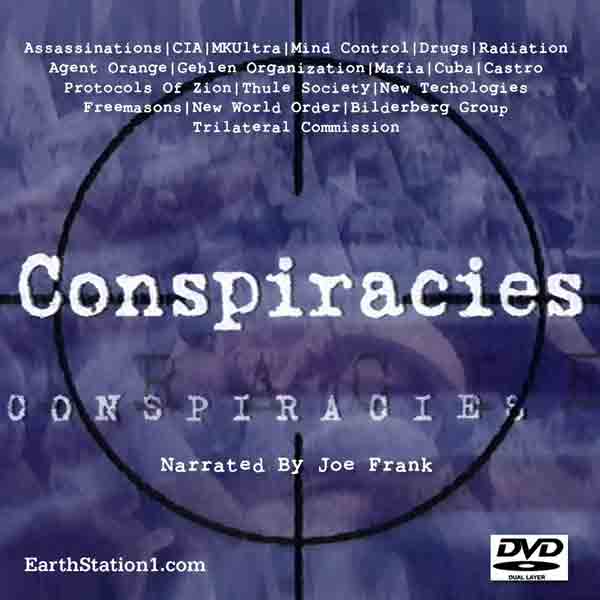
September 28: International Right To Know
Day (International Day For Universal Access To Information): --
This day supports the idea that everyone around the globe has the
fundamental right to seek, receive and disseminate information.
This right is also linked to the right to freedom of expression.
Communication at all levels, local, national, and worldwide, is
included. The right to information is necessary for making
decisions, engaging in democratic government, and increasing
openness which aids citizens in having access to knowledge about
how they are being governed. It builds a ground for a fight
against corruption. The media also plays a critical role, as it
informs the public about topics of interest and relies on the
ability to seek and receive information. That is why it is
believed that this right is also linked to the right to freedom of
the press. Knowledge influences our thinking, reasoning, and the
way we express ourselves. Most times, we make decisions based on
facts and things we know. Since we live in a society in which we
are codependent, it is important for us to know what is happening
around us to take action for our safety and improvement.
International Right To Know Day is a day on which we acknowledge
our right to seek and access information. The day was first
inaugurated by a UNESCO Conference in 2002, after which it was
adopted and developed by many international civil societies, which
celebrated it in 2012. It was finally proclaimed in 2019 by the
U.N. General Assembly as International Day for Universal Access to
Information (IDUAI) and is officially celebrated on September 28.
On Sale Until Midnight Tonight PT!
https://store.earthstation1.com/conspiracies-special-narrated-by-joe-frank-mp4-video-download-dvd.html
Today's
EarthStation1.com 15% (Or More!) Off Commemorative Memorial Title:
Understanding Northern Ireland: The Historical Evidence MP4 Or DVD
Today, September 28, 2026
September 28: Ulster Day: -- September
28, 1912: Irish Nationalism: The Irish Home Rule Movement: The
Government Of Ireland Act 1914 (The Irish Home Rule Act, The Home
Rule Act, The Third Home Rule Bill): Ulster Day: The Ulster
Covenant: -- Ulster's Solemn League and Covenant, commonly known
as The Ulster Covenant, a staunch reaction to the devolution of
power to Ireland within the United Kingdom is signed by some
500,000 Ulster Protestant Unionists in opposition to the Third
Irish Home Rule Bill introduced by the British Government on
September 18 in the same year. Sir Edward Carson was the first
person to sign the Covenant at Belfast City Hall with a silver
pen, followed by Lord Londonderry (the former viceroy of Ireland),
representatives of the Protestant churches, and then by Sir James
Craig. The signatories, 471,414 in all, were all against the
establishment of a Home Rule parliament in Dublin. The Ulster
Covenant is immortalised in Rudyard Kipling's poem "Ulster
1912". On September 23, 1912, the Ulster Unionist Council
voted in favour of resolution pledging itself to the Covenant. The
Covenant had two basic parts: the Covenant itself, which was
signed by men, and the Declaration, which was signed by women. In
total, the Covenant was signed by 237,368 men; the Declaration, by
234,046 women. Both the Covenant and Declaration are held by the
Public Record Office of Northern Ireland (PRONI). An online
searchable database is available on the PRONI website. In January
1913, the Ulster Volunteers aimed to recruit 100,000 men aged from
17 to 65 who had signed the Covenant as a unionist militia. A
British Covenant, similar to the Ulster Covenant in opposition to
the Home Rule Bill, received two million signatures in 1914.
September 28 is today known as "Ulster Day" to
unionists. On Sale Until Midnight Tonight PT!
https://store.earthstation1.com/understanding-northern-ireland-the-historical-evidence-mp4-or-dvd.html
Today's
EarthStation1.com 15% (Or More!) Off Commemorative Memorial Title:
Timeline Middle Ages TV Newscast Series + Bonus MP4 Video Download
DVD
Today, September 28, 2026
September 28, 1066: England: The History
Of England: The History Of Medieval England: The Norman Conquest
(The Conquest, The Norman Conquest Of England): -- William The
Conqueror and his army, having sailed from the mouth of the Somme
river the night before, lands in England, beginning the invasion
of England known as the Norman Conquest. The Norman Conquest Of
England (in Britain, often called the Norman Conquest or the
Conquest) was the 11th-century invasion and occupation of England
by an army of Norman, Breton, Flemish and French soldiers led by
Duke William II of Normandy, later usually known as William The
Conqueror, and sometimes as William The Bastard (he was regularly
described as bastardus (bastard) in non-Norman contemporary
sources). William was the son of the unmarried Robert I, Duke of
Normandy, by Robert's mistress Herleva. His illegitimate status
and his youth caused some difficulties for him after he succeeded
his father, as did the anarchy that plagued the first years of his
rule. During his childhood and adolescence, members of the Norman
aristocracy battled each other, both for control of the child duke
and for their own ends. William's claim to the English throne
derived from his familial relationship with the childless
Anglo-Saxon King Edward the Confessor, who may have encouraged
William's hopes for the throne. Edward died in January 1066 and
was succeeded by his brother-in-law Harold Godwinson. The
Norwegian king Harald Hardrada invaded northern England in
September 1066 and was victorious at the Battle of Fulford, but
Harold defeated and killed him at the Battle Of Stamford Bridge on
25 September. Within days, William landed in southern England.
Harold marched south to oppose him, leaving a significant portion
of his army in the north. Harold's army confronted William's
invaders on October 4 at the Battle of Hastings; William's force
defeated Harold, who was killed in the engagement. Although
William's main rivals were gone, he still faced rebellions over
the following years and was not secure on his throne until after
1072. The lands of the resisting English elite were confiscated;
some of the elite fled into exile. To control his new kingdom,
William granted lands to his followers and built castles
commanding military strongpoints throughout the land. Other
effects of the conquest included the court and government, the
introduction of the Norman language as the language of the elites,
and changes in the composition of the upper classes, as William
enfeoffed lands to be held directly from the king. More gradual
changes affected the agricultural classes and village life: the
main change appears to have been the formal elimination of
slavery, which may or may not have been linked to the invasion.
There was little alteration in the structure of government, as the
new Norman administrators took over many of the forms of
Anglo-Saxon government. On Sale Until Midnight Tonight PT!
https://store.earthstation1.com/timeline-tv-series-on-the-middle-ages-in-tv-newscast-format-2-dvd-se2.html
Today's
EarthStation1.com 15% (Or More!) Off Commemorative Memorial Title:
The Longest Hatred: Antisemitism & Jewish Persecution DVD,
MP4, USB
Today, September 28, 2026
September 28, 1791: The Age Of
Enlightenment (The Enlightenment, The Age Of Reason): The Age Of
Revolution: The Atlantic Revolutions: The French Revolution: The
History Of The Jews In France: Jewish Emancipation In France: -- A
couple of days before the dissolution of the National Assembly,
and the day after the National Assembly voted to award full
citizenship to Jews in France, France becomes the first country to
emancipate its Jewish population. The day prior, Assemblyman and
Jacobin Club member Adrien Duport, formerly a parliamentary
councilor, unexpectedly ascended the tribune and said "I
believe that freedom of worship does not permit any distinction in
the political rights of citizens on account of their creed. The
question of the political existence of the Jews has been
postponed. Still the Muslems and the men of all sects are admitted
to enjoy political rights in France. I demand that the motion for
postponement be withdrawn, and a decree passed that the Jews in
France enjoy the privileges of full citizens." This
proposition was accepted amid loud applause. Assemblyman
Jean-Francois Rewbell endeavored to oppose the motion, but he was
interrupted by President of the Assembly Regnault de Saint-Jean,
who suggested "that every one who spoke against this motion
should be called to order, because he would be opposing the
constitution itself". The bill was enacted the following day,
September 28, 1791. Jewish emancipation was the external and
internal process in various nations in Europe of eliminating
Jewish disabilities, e.g. Jewish quotas, to which Jewish people
were then subject, and the recognition of Jews as entitled to
equality and citizenship rights on a communal, not merely
individual, basis. It included efforts within the community to
integrate into their societies as citizens. It occurred gradually
between the late 18th century and the early 20th century. Jewish
emancipation followed the Age of Enlightenment and the concurrent
Jewish enlightenment. Various nations repealed or superseded
previous discriminatory laws applied specifically against Jews
where they resided. Before the emancipation, most Jews were
isolated in residential areas from the rest of the society;
emancipation was a major goal of European Jews of that time, who
worked within their communities to achieve integration in the
majority societies and broader education. Many became active
politically and culturally within wider European civil society as
Jews gained full citizenship. They emigrated to countries offering
better social and economic opportunities, such as the Russian
Empire and France. Some European Jews turned to Socialism, others
to Jewish nationalism: Zionism. There has been a Jewish presence
in France since at least the early Middle Ages. France was a
center of Jewish learning in the Middle Ages, but persecution
increased as the Middle Ages wore on, including multiple
expulsions and returns. During French Revolution in the late 18th
century, France was the first country in Europe to emancipate its
Jewish population. Antisemitism has persisted despite legal
equality, as expressed in the Dreyfus Affair of the late 19th
century. During World War II, the Vichy government collaborated
with Nazi occupiers to deport numerous French and foreign Jewish
refugees to concentration camps. By the war's end, 75% of the
Jewish population in France survived the Holocaust. In the 21st
century, France has the largest Jewish population in Europe and
the third-largest Jewish population in the world (after Israel and
the United States). The Jewish community in France is estimated to
be 480,000-550,000, but depends on the adopted definition. French
Jewish communities are concentrated in the metropolitan areas of
Paris, which has the largest population; Marseille, with the
second-largest population of 70,000; Lyon, Nice, Strasbourg, and
Toulouse. The majority of French Jews in the 21st century are
Sephardi and Mizrahi North African Jews, many of whom (or their
parents) emigrated since the late 20th century from former French
colonies of North Africa after those countries became independent.
They migrated to France beginning in the late 20th century. They
span a range of religious affiliations, from the ultra-Orthodox
Haredi communities to the large segment of Jews who are entirely
secular and who commonly marry outside the Jewish community.
Approximately 200,000 French Jews live in Israel. Since 2010 or
so, more have been making aliyah (the immigration of Jews from the
diaspora to the Land of Israel) amid rising antisemitism in
France. On Sale Until Midnight Tonight PT!
https://store.earthstation1.com/the-longest-hatred-antisemitism-amp-jewish-persecution-dvd-mp3-us3.html
Today's
EarthStation1.com 15% (Or More!) Off Commemorative Memorial Title:
The Great Air Race Of 1924 1st Aerial World Flight DVD, Download,
USB
Today, September 28, 2026
September 28, 1924: Aviation: The History
Of Aviation: Aviation Firsts: Circumnavigation: Circumnavigation
Of The Earth: Aerial Circumnavigation Of The Earth: The First
Aerial Circumnavigation Of The Earth (The Great Air Race Of 1924):
-- The First Aerial Circumnavigation Of The Earth is completed by
a team of four aviators from an eight-man team of the US Army Air
Service, the precursor of the US Air Force, when they land in
Seattle after an arduous and dangerous trip. The journey took 175
days, covering over 27,553 miles (44,342 km). The team generally
traveled east to west, around the northern-Pacific Rim, through to
South Asia and Europe and back to the United States. Airmen Lowell
H. Smith and Leslie P. Arnold, and Erik H. Nelson and John Harding
Jr. made the trip in two single-engined open-cockpit Douglas World
Cruisers (DWC) configured as floatplanes for most of the journey.
Four more flyers in two additional DWC began the journey but their
aircraft crashed or were forced down. All airmen survived. On Sale
Until Midnight Tonight PT!
https://store.earthstation1.com/the-great-air-race-of-1924-dvd-1st-aerial-world-circumnavig19241.html
Today's
EarthStation1.com 15% (Or More!) Off Commemorative Memorial Title:
The Nobel Century Nobel Prize History TV Series DVD, MP4, USB
Stick
Today, September 28, 2026
September 28, 1928: Biology: The History
Of Biology: Bacteriology: The History Of Bacteriology: -- Sir
Alexander Fleming notices a bacteria-killing mold growing in his
laboratory, discovering what later became known as penicillin.
Alexander Fleming, Scottish physician, microbiologist,
pharmacologist, and botanist, Nobel Prize laureate (1881-1955) was
born in Lochfield, Scotland. The best known discoveries of Sir
Alexander Fleming FRS FRSE FRCS are the enzyme lysozyme in 1923,
and the world's first broadly effective antibiotic substance
benzylpenicillin (Penicillin G) from the mould Penicillium Rubens
in 1928, for which he shared the Nobel Prize in Physiology or
Medicine in 1945 with Howard Florey and Ernst Boris Chain. He
wrote many articles on bacteriology, immunology, and chemotherapy.
He discovered Penicillin by accident, when he found that mold from
soil killed deadly bacteria without injuring human tissue. Fleming
was knighted for his scientific achievements in 1944. In 1999, he
was named in Time magazine's list of the 100 Most Important People
of the 20th century. In 2002, he was chosen in the BBC's
television poll for determining the 100 Greatest Britons, and in
2009, he was also voted third "greatest Scot" in an
opinion poll conducted by STV, behind only Robert Burns and
William Wallace. On Sale Until Midnight Tonight PT!
https://store.earthstation1.com/the-nobel-century-nobel-prize-history-tv-series-dvd-mp4-us4.html
Today's
EarthStation1.com 15% (Or More!) Off Commemorative Memorial Title:
American Revolutionary War Documentaries DVD, Download, USB Drive
Today, September 28, 2026
September 28, 1781: The Age Of
Enlightenment (The Enlightenment, The Age Of Reason): The Age Of
Revolution: The Atlantic Revolutions: The American Enlightenment:
The American Revolution: The American Revolutionary War: The
Yorktown Campaign: The Siege Of Yorktown: -- American forces
backed by a French fleet begin the Siege Of Yorktown, Virginia,
during the American Revolutionary War. The Siege Of Yorktown, also
known as the Battle Of Yorktown, the Surrender At Yorktown, German
Battle or the Siege Of Little York, ending on October 19, 1781, at
Yorktown, Virginia, was a decisive victory by a combined force of
American Continental Army troops led by General George Washington
and French Army troops of the French Expeditionary Force (French:
Expedition Particuliere, "Special Expedition") led by
the Jean-Baptiste Donatien de Vimeur, Comte de Rochambeau over a
British Army commanded by British peer and Lieutenant General
Charles Cornwallis. The culmination of the Yorktown campaign, the
siege proved to be the last major land battle of the American
Revolutionary War in the North American theater, as the surrender
by Cornwallis, and the capture of both him and his army, prompted
the British government to negotiate an end to the conflict. The
battle boosted faltering American morale and revived French
enthusiasm for the war, as well as undermining popular support for
the conflict in Great Britain. In 1780, about 5,500 French
soldiers landed in Rhode Island to help their American allies
fight the British troops who controlled New York City. Following
the arrival of dispatches from France that included the
possibility of support from the French West Indies fleet of the
Comte de Grasse, Washington and Rochambeau decided to ask de
Grasse for assistance either in besieging New York, or in military
operations against a British army operating in Virginia. On the
advice of Rochambeau, de Grasse informed them of his intent to
sail to the Chesapeake Bay, where Cornwallis had taken command of
the army. Cornwallis, at first given confusing orders by his
superior officer, Henry Clinton, was eventually ordered to build a
defensible deep-water port, which he began to do in Yorktown.
Cornwallis' movements in Virginia were shadowed by a Continental
Army force led by the Marquis de Lafayette. The French and
American armies united north of New York City during the summer of
1781. When word of de Grasse's decision arrived, both armies began
moving south toward Virginia, engaging in tactics of deception to
lead the British to believe a siege of New York was planned. De
Grasse sailed from the West Indies and arrived at the Chesapeake
Bay at the end of August, bringing additional troops and creating
a naval blockade of Yorktown. He was transporting 500,000 silver
pesos collected from the citizens of Havana, Cuba, to fund
supplies for the siege and payroll for the Continental Army. While
in Santo Domingo, de Grasse met with Francisco Saavedra de
Sangronis, an agent of Carlos III of Spain. De Grasse had planned
to leave several of his warships in Santo Domingo. Saavedra
promised the assistance of the Spanish navy to protect the French
merchant fleet, enabling de Grasse to sail north with all of his
warships. In the beginning of September, he defeated a British
fleet led by Sir Thomas Graves that came to relieve Cornwallis at
the Battle of the Chesapeake. As a result of this victory, de
Grasse blocked any escape by sea for Cornwallis. By late
September, Washington and Rochambeau arrived, and the army and
naval forces completely surrounded Cornwallis. After initial
preparations, the Americans and French built their first parallel
and began the bombardment. With the British defense weakened, on
October 14, 1781, Washington sent two columns to attack the last
major remaining British outer defenses. A French column under
Wilhelm of the Palatinate-Zweibrucken took Redoubt No. 9 and an
American column under Alexander Hamilton took Redoubt No. 10. With
these defenses taken, the allies were able to finish their second
parallel. With the American artillery closer and its bombardment
more intense than ever, the British position began to deteriorate
rapidly. Cornwallis asked for capitulation terms on October 17.
After two days of negotiation, the surrender ceremony occurred on
October 19; Cornwallis was absent from the ceremony. With the
capture of more than 7,000 British soldiers, negotiations between
the United States and Great Britain began, resulting in the Treaty
Of Paris of 1783. On Sale Until Midnight Tonight PT!
https://store.earthstation1.com/american-revolutionary-war-dvd-documentaries.html
Today's
EarthStation1.com 15% (Or More!) Off Commemorative Memorial Title:
The Story Of Civilization: Will & Ariel Durant DVD, MP3
Download, USB
Today, September 28, 2026
September 28, 48 BC: #DOTD: Gnaeus
Pompeius Magnus, best known by the anglicizations Pompey and
Pompey The Great, leading Roman general and statesman whose career
was significant in Rome's transformation from a republic to empire
(b. September 29, 61 BC) #dies the day before his 59th birthday
when he is assassinated on the orders of King Ptolemy of Egypt
after landing in Egypt. Achillas, the head of the Egyptian army,
went to Pompey's ship anchored at Pelusium, a Roman provincial
capital in the eastern extremes of Egypt's Nile Delta. Achillas
arrived by a fishing boat together with Lucius Septimius, who had
once been one of Pompey's officers, and a third assassin, Savius.
Pompey's associates saw this lack of pomp with suspicion and
advised Pompey to put back out to open sea out of reach of the
Egyptians' missiles. Achillas claimed that the sea's sandy bottom
and shallows had not allowed him to approach with a ship. However,
the royal ships were seen taking crews on board, and there were
soldiers on the shore. Pompey's wife, Cornelia Metella, thought
Pompey was going to be killed, but he boarded the boat. The lack
of friendliness on the boat prompted Pompey to tell Septimius that
he was an old comrade. Septimius merely nodded, then thrust a
sword into Pompey, and then Achillas and Savius stabbed him with
daggers. The people on Pompey's ship could see this and,
horrified, fled. Because the wind was favourable, the Egyptians
did not pursue them. Pompey's head was severed, and his unclothed
body was thrown into the sea. Philip, one of Pompey's freedmen who
had boarded the boat, wrapped it with his tunic and made a funeral
pyre on the shore. Pompey died the day before his 58th birthday.
When Caesar arrived in Egypt a few days later, he was appalled. He
turned away loathing the man who brought Pompey's head, Theodotus
of Chios, the king's tutor who had argued for Pompey's
assassination. When Caesar was given Pompey's seal-ring, he cried.
Theodotus fled Egypt and escaped Caesar's revenge. Pompey's
remains were taken to Cornelia, who gave them burial at his Alban
villa. Pompey was born in Picenum, Italy, the eldest son of
provincial noble Gnaeus Pompeius Strabo. A member of the
senatorial nobility, he was for a time a political ally and later
enemy of Julius Caesar, despite his successful marriage to
Caesar's daughter Julia. Pompey entered a military career while
still young and rose to prominence serving the later dictator
Sulla as a commander in Sulla's civil war, his success at which
earned him the cognomen Magnus - "the Great" - after
Pompey's boyhood hero Alexander The Great. His adversaries also
gave him the nickname adulescentulus carnifex ("teenage
butcher") for his ruthlessness. Pompey's success as a general
while still young enabled him to advance directly to his first
consulship without meeting the normal cursus honorum (required
steps in a political career). He was consul three times and
celebrated three Roman triumphs. In 60 BC, Pompey joined Marcus
Licinius Crassus and Gaius Julius Caesar in the unofficial
military-political alliance known as the First Triumvirate, which
Pompey's marriage to Caesar's daughter Julia helped secure. After
Crassus and Julia's deaths, Pompey sided with the Optimates, the
conservative faction of the Roman Senate. Pompey and Caesar then
contended for the leadership of the Roman state, leading to a
civil war. When in that war Pompey was defeated at the Battle Of
Pharsalus, in 48 BC, he sought refuge in Egypt, where he was
assassinated the day before his 58th birthday on the orders of
King Ptolemy of Egypt after landing in Egypt. On Sale Until
Midnight Tonight PT!
https://store.earthstation1.com/story-of-civilization-will-amp-ariel-durant-mp3-dvd-11-audiobo311.html
Today's
EarthStation1.com 15% (Or More!) Off Commemorative Memorial Title:
The Struggles For Poland TV Series + Bonus MP4 Video Download DVD
Set
Today, September 28, 2026
September 28, 1939: The European Civil
War: World War II: The Second European War (The European Theater
Of World War II): The Invasion Of Poland (The September Campaign,
The Polish Campaign, The War Of Poland Of 1939, The Polish
Defensive War Of 1939): The Soviet Invasion Of Poland: The Siege
Of Warsaw (1939): -- Warsaw surrenders to Nazi Germany during
World War II. Nazi Germany and the Soviet Union agree on a
division of Poland between them. The Siege Of Warsaw in 1939 was
fought between the Polish Warsaw Army (Armia Warszawa) garrisoned
and entrenched in the capital of Poland (Warsaw) and the invading
German Army. It began with huge aerial bombardments initiated by
the Luftwaffe starting on September 1, 1939 following the Nazi
Invasion Of Poland. Land fighting started on September 8, when the
first German armored units reached the Wola district and
south-western suburbs of the city. Despite German radio broadcasts
claiming to have captured Warsaw, the initial enemy attack was
repelled and soon afterwards Warsaw was placed under siege. The
siege lasted until September 28, when the Polish garrison,
commanded under General Walerian Czuma, officially capitulated.
The following day approximately 140,000 Polish soldiers and troops
left the city and were taken as prisoners of war. On October 1 the
Wehrmacht entered Warsaw, which started a period of German
occupation that lasted until the devastating Warsaw Uprising and
later until January 17, 1945, when the city was liberated by
Soviet forces. The Polish Army surrendered nearly 140,000 troops
and during the siege around 18,000 civilians of Warsaw perished.
As a result of the air bombardments 10% of the city's buildings
were entirely destroyed and further 40% were heavily damaged.
Under the international rules regarding aerial warfare in 1939
Warsaw was considered a legitimate military target as the city was
on the front line during the fighting and it was heavily defended
by the Polish army. On Sale Until Midnight Tonight PT!
https://store.earthstation1.com/the-struggles-for-poland-dvd-set-all-9-shows-5-dis95.html
Today's
EarthStation1.com 15% (Or More!) Off Commemorative Memorial Title:
Hoover Vs The Kennedys The Second Civil War TV Series MP4 Download
DVD
Today, September 28, 2026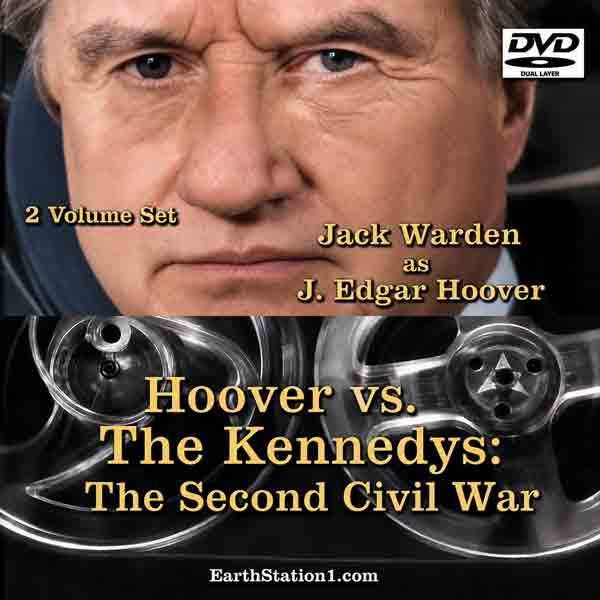
September 28, 1962: Civil Rights
Movements: The American Civil Rights Movement (1954-1968):
Anti-Black Racism In The United States: School Segregation: School
Segregation In The United States: The Ole Miss Riot Of 1962
(September 30 - October 1, 1962) (The Battle Of Oxford): --
Governor Ross Barnett is found guilty of civil contempt of the
federal court for preventing James Meredith from enrolling in the
University Of Mississippi by The United States Court Of Appeals
For The Fifth Circuit orders Barnett to purge himself of contempt
or face arrest, imprisonment and a fine of 10K USD a day if
Meredith was not registered by October 2. The next day, during
halftime at a September 29 Ole Miss football game, Barnett made a
defiant 15-word speech: "I love Mississippi! I love her
people! Our customs! I love and respect our heritage!"
President Kennedy federalized the Mississippi National Guard
shortly thereafter. The following day, September 30, The Ole Miss
Riot Of 1962 (The Battle Of Oxford) (September 30 - October 1,
1962) began as rumors spread that Kennedy's federal agents were
preparing to arrest Barnett at the Governor's Mansion in Jackson.
White-supremacist Citizens' Councils organized a "wall of
human flesh" - over 2,000 people - to surround the mansion
and protect Barnett, but the alleged federal arrest never
materialized. Anticipating violence at Ole Miss, 182 journalists
flocked to Oxford to witness Meredith's next enrollment attempt.
Photojournalists saw the visual potential of Meredith's plight: "a
solitary man against thousands". Time magazine wrote that the
dispute was "the gravest conflict between federal and state
authority since the Civil War". In 1954, the U.S. Supreme
Court ruled in Brown v. Board of Education that segregation in
public schools was unconstitutional. Eight years after the Brown
decision, every Mississippi school district remained segregated,
and all attempts by African American applicants to integrate the
University Of Mississippi had failed. In contrast, most other
Southern states had already yielded and integrated their
institutions of higher learning, with the University Of Arkansas
doing so in 1948. Shortly after the 1961 inauguration of President
John F. Kennedy, who was elected largely on promises to advance
civil rights, African American Air Force veteran James Meredith
applied to Ole Miss. Meredith selected Ole Miss as it was a symbol
of "white prestige and power" attended by the children
of the state's elite. Meredith did not inform the university of
his race until midway through the application process. State
officials then obstructed and delayed his application for 20
months. In response, Meredith sued the university in late 1961.
After months of obstruction by the avowed segregationist justice
Benjamin Franklin Cameron of the Fifth Circuit Court of Appeals,
Meredith appealed to the U.S. Supreme Court. On September 10,
1962, Justice Hugo Black delivered the court's decision: Meredith
must be admitted for the fall semester. Mississippi's
segregationist Governor Ross Barnett, himself a graduate of Ole
Miss, had the Mississippi Legislature pass a law barring the
university enrollment of anyone with a charge of "moral
turpitude" in state or federal court. Barnett then had
Meredith charged and imprisoned for accidentally writing "1960"
instead of "1961" while registering to vote; the Fifth
Circuit quickly ordered Meredith's release. Under the orders of
the president's brother, Attorney General Robert F. Kennedy, the
Department Of Justice (DOJ) entered the case on Meredith's behalf.
Facing contempt charges and jail, the university's board
transferred its powers, and liability, to Governor Barnett.
Meredith then travelled to the Ole Miss campus in Oxford to
register; he was blocked by Barnett, who read and presented a
proclamation on states' rights. In a second attempt, Meredith,
accompanied by DOJ civil-rights division chief John Doar and Chief
U.S. Marshal James McShane, tried to register at the Woolfolk
State Office Building in Jackson. He was again physically blocked
by Barnett, who issued the rehearsed quip: "Which one is
Meredith?". Another attempt to register at Ole Miss was
stopped by Lieutenant Governor Paul B. Johnson Jr. and lines of
state troopers. This set the stage for The Ole Miss Riot Of 1962
(The Battle Of Oxford) (September 30 - October 1, 1962), a violent
disturbance that occurred at the University Of Mississippi, where
segregationist rioters sought to prevent the enrollment of
Meredith, forcing Presidentto quell the riot by mobilizing over
30,000 troops, the most for a single disturbance in American
history. In the wake of the Supreme Court's 1954 decision Brown v.
Board of Education, Meredith tried to integrate Ole Miss by
applying in 1961. When he informed the university that he was
African American, his admission was delayed and obstructed, first
by school officials and then by Mississippi Governor Ross Barnett.
In a bid to block his enrollment, Barnett even had Meredith
temporarily jailed. Multiple attempts by Meredith, accompanied by
federal officials, to enroll were physically blocked. Hoping to
avoid violence and ensure Meredith's enrollment, President Kennedy
and Attorney General Robert F. Kennedy had a series of
unproductive telephone negotiations with Barnett. In preparation
for another registration attempt, federal law enforcement were
dispatched to accompany Meredith to maintain order, but a riot
erupted on campus. Partly incited by white supremacist General
Edwin Walker, the mob assaulted reporters and federal officers,
burned and looted property, and hijacked vehicles. Reporters, U.S.
marshals, and the U.S. Deputy Attorney General Nicholas Katzenbach
sheltered and were besieged in the Lyceum, the university's
administrative building. Into the late morning of October 1, 27
marshals received gunshot wounds, and two civilians, including a
French journalist, were murdered. Oblivious to the riot, President
Kennedy made an Oval Office Address, saluting Mississippi's help
in registering Meredith. Once informed, Kennedy invoked the
Insurrection Act of 1807 and had U.S. Army units under Brigadier
General Charles Billingslea quell the riot. The riot and the
federal crackdown were a major turning point in the civil rights
movement and resulted in the desegregation of Ole Miss, the first
integration of any public educational facility in Mississippi. The
final time troops were deployed during the civil rights movement,
it is regarded as the end of the segregationist tactic of massive
resistance. A statue of James Meredith now commemorates the event
on campus, and the site of the riot is designated as a National
Historic Landmark. On Sale Until Midnight Tonight PT!
https://store.earthstation1.com/hoover-vs-the-kennedys-the-second-civil-war-tv-series-mp4-download-dv4.html
Today's
EarthStation1.com 15% (Or More!) Off Commemorative Memorial Title:
Alternative Sgt. Pepper's Lonely Hearts Club Band MP3 CD Download
USB
Today, September 28, 2026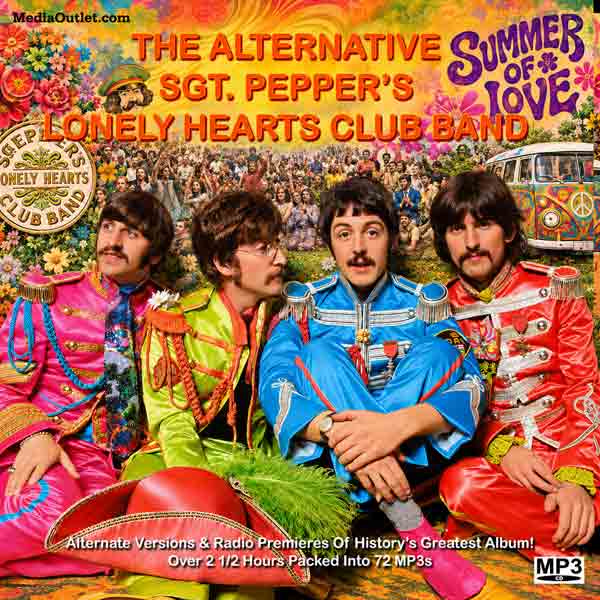
September 28, 1924: #BOTD: #HBD! Marcello
Mastroianni, Italian-French film actor and singer, regarded as
Italy's biggest film star of all time (d. December 19, 1996) is
#born Marcello Vincenzo Domenico Mastroianni in Fontana Liri, a
small village in the Apennines in the province of Frosinone,
Lazio, Italy. His films include: La Dolce Vita; La Notte; Divorce
Italian Style; Yesterday, Today and Tomorrow; Marriage Italian
Style; The 10th Victim; A Special Day; City of Women; Henry IV;
Dark Eyes and Everybody's Fine. His honours included BAFTAs, Best
Actor awards at the Venice and Cannes film festivals, two Golden
Globes and three Oscar nominations. A black & white photo of
Marcello Mastroianni was modeled to appear on the cover of the
Beatles landmark record album Sgt. Pepper's Lonely Hearts Club
Band, but in the final shoot, only the top portion of his hat is
visible between the top of the heads of the waxworks Ringo Starr
and Paul McCartney. Marcello Mastroianni died of pancreatic cancer
in Paris at the age of 72. Both of his daughters (Barbara with his
wife Flora Carabella, Chiara with his partner Catherine Deneuve),
as well as Catherine Deneuve (first partner, 1970-1974) and Anna
Maria Tato (second partner, 1976-1996, his death), were at his
bedside. The Trevi Fountain in Rome, associated with his role in
Fellini's La Dolce Vita, was symbolically turned off and draped in
black as a tribute. He is buried at Campo Verano cemetery in Rome,
Italy. On Sale Until Midnight Tonight PT!
https://store.earthstation1.com/alternative-sgt-pepper39s-lonely-hearts-club-band-mp3-cd-download-393.html
Today's
EarthStation1.com 15% (Or More!) Off Commemorative Memorial Title:
Norman's Corner (1987) Gilbert Gottfried TV Special DVD, Download,
USB
Today, September 28, 2026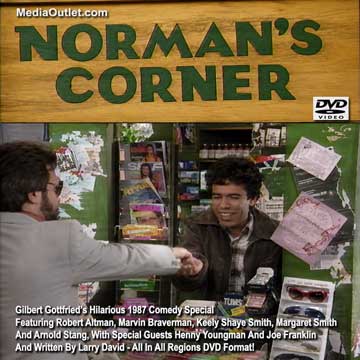
September 28, 1918: #BOTD: #HBD! Arnold
Stang, American comic actor and voice actor of radio, film and
television, whose comic persona was a small and bespectacled, yet
brash and knowing big-city type, voice actor of the title role of
the 1961-62 television cartoon Top Cat (d. December 20, 2009) is
#born Arnold Sidney Stang into a Jewish American family in New
York City; however, Stang often claimed Chelsea, Massachusetts, as
his birthplace, and 1925 as his birth year. Stang once described
himself as "a frightened chipmunk who's been out in the rain
too long." Stang worked in New York-based network radio shows
as a teenager, appearing on children's programs such as The Horn
and Hardart Children's Hour and Let's Pretend. By 1940, he had
graduated to teenaged roles, appearing as Seymour on The
Goldbergs. Director Don Bernard hired him in October 1941 to do
the commercials on the CBS program Meet Mr. Meek but decided his
constantly cracking voice would hurt the commercial so he ordered
scriptwriters to come up with a role for him. He next appeared on
the summer replacement show The Remarkable Miss Tuttle with Edna
May Oliver in 1942 and replaced Eddie Firestone Jr. in the title
role of That Brewster Boy when Firestone joined the U.S. Marine
Corps in 1943. Comedian Henry Morgan made him a sidekick on his
program in fall of 1946 and Stang appeared in similar roles the
following year on radio shows with Eddie Cantor and Milton Berle.
He also did the voice of Jughead for a short while on the Archie
Andrews radio show when it was broadcast by NBC. At this time
Stang had appeared in a number of movies, including Seven Days
Leave, My Sister Eileen, So This Is New York with Henry Morgan,
and They Got Me Covered. He had also appeared on the Broadway
stage in Sailor Beware, All In Favor and Same Time Next Week,
where he first worked with Berle. Stang moved to television at the
start of the Golden Age. He had a recurring role in the TV show
The School House on the DuMont Television Network in 1949. He was
a regular on Eddie Mayehoff's short-lived situation comedy Doc
Corkle in fall of 1952 as well as comedy relief on Captain Video
and His Video Rangers as Clumsy McGee. Then he made a guest
appearance on Milton Berle's Texaco Star Theater on May 12, 1953
and joined him as a regular as Francis the Stagehand the following
September, often berating or heckling the big-egoed star for big
laughs. Stang also had guest roles on several variety shows of the
day including The Colgate Comedy Hour. In early 1951, Stang
appeared on Henry Morgan's Great Talent Hunt, a take-off of The
Original Amateur Hour, as "Gerard", supposedly
recruiting "talent" for Morgan. Stang starred in movie
short subjects for producer Edward Montagne in the early 1950s. In
1964, when Montagne was producing his McHale's Navy spinoff
Broadside, he recruited Arnold Stang midway through production and
gave him co-star billing. Stang joined the ensemble cast as
outspoken master chef Stanley Stubbs. In films, he had a
substantial supporting role as the best friend Sparrow in The Man
with the Golden Arm (1955) with Frank Sinatra and Kim Novak. In
It's a Mad, Mad, Mad, Mad World (1963) he played Ray, who, along
with his partner Irwin (Marvin Kaplan), owns a gas station that
Jonathan Winters destroys. He appeared in Hello Down There (1969).
He partnered with Arnold Schwarzenegger (billed as "Arnold
Strong 'Mr. Universe'") in the latter's first film, Hercules
in New York (1969). In 1959, ABC Paramount Records released an
album by Stang, entitled Arnold Stang's Waggish Tales. Stang
worked often as a voice actor for animated cartoons, and voiced
the title role in Top Cat. The show lasted one season in prime
time, 1961-62, before going into reruns. Stang also provided the
voice for Popeye's pal Shorty (a caricature of Stang), Herman the
mouse in a number of Famous Studios cartoons, Tubby Tompkins in a
few Little Lulu shorts, and Catfish on Misterjaw. He also voiced
the character Nurtle the Twurtle in the 1965 animated feature
Pinocchio in Outer Space. On television he appeared in commercials
for the Chunky candy bar, where he would list many of its
ingredients, smile and say, "Chunky, what a chunk of
chocolate!" He provided the voice of the Honey Nut Cheerios
Bee in the 1980s and was also a spokesman for Vicks Vapo-Rub. As a
pitchman for Alcoa aluminum window screens in the late 1960s, he
was known for the tag line "Arnold Stang says don't get
stung". Stang also appeared in "The Grave Robber,"
an episode of the popular horror anthology series Tales from the
Darkside, playing Tapok, an ancient Egyptian mummy who encounters
some unscrupulous archaeologists who lure him into a game of strip
poker. Arnold Stang reprised Top Cat in Yogi's Treasure Hunt and
Top Cat and the Beverly Hills Cats. Stang also appeared on an
episode of The Cosby Show with guest star Sammy Davis Jr. (He also
made a cameo appearance in Bill Cosby's 1990 film Ghost Dad.) In
one TV advertisement, he played Luther Burbank, proudly showing
off his newly invented "square tomato" to fit neatly in
typical square slices of commercial bread, then being informed
that the advertising bakery had beat him to it by producing round
loaves of bread. He played the photographer in the 1993 film
Dennis the Menace with Walter Matthau. He also provided many
voices for the Cartoon Network series Courage the Cowardly Dog and
Turner Program Services' original series Captain Planet and the
Planeteers. He had a small role as Queasy the Parrot in the 1977
film Raggedy Ann & Andy: A Musical Adventure. Stang was in
many Broadway stage productions, including Front Page with Peggy
Cass in the 1969 revival. In 1994, he guest-starred as the voice
of Irwin the Mouse in the Garfield and Friends episode "Thoroughly
Mixed-Up Mouse". In 2004, Stang made his last appearance in
an interview with animator Earl Kress about the making of Top Cat.
Arnold Stang died of pneumonia at Newton-Wellesley Hospital in
Newton, Massachusetts at the age of 91. He was cremated, and his
ashes were buried in Newton's cemetery. On Sale Until Midnight
Tonight PT!
https://store.earthstation1.com/norman39s-corner-1987-dvd-gilbert-gottlfried-comedy-s391987.html
Today's
EarthStation1.com 15% (Or More!) Off Commemorative Memorial Title:
Rock & Roll An Unruly History 10 Part TV Series MP4 Video
Download DVD
Today, September 28, 2026
September 28, 1938: #BOTD: #HBD! Ben E.
King, African American soul and R & B singer, songwriter and
record producer (d. April 30, 2015) is #born Benjamin Earl Nelson
in Henderson, North Carolina. He is best known as the singer and
co-composer of "Stand by Me", a U.S. Top 10 hit, both in
1961 and later in 1986 (when it was used as the theme to the film
of the same name), a number one hit in the United Kingdom in 1987,
and number 25 on the RIAA's list of Songs of the Century - and as
one of the principal lead singers of the R & B vocal group The
Drifters, notably singing the lead vocals of one of their biggest
global hit singles (and only U.S. No. 1 hit), "Save the Last
Dance for Me". Besides "Stand By Me", his songs
"There Goes My Baby" and "Spanish Harlem" also
appeared on the Rock and Roll Hall of Fame's list of 500 Songs
That Shaped Rock and Roll. Ben E. King died following a brief
illness of natural causes at Hackensack University Medical Center
at the age of 76. He is buried at Hackensack Cemetery and
Mausoleum in Hackensack, New Jersey. On Sale Until Midnight
Tonight PT!
https://store.earthstation1.com/rock-amp-roll-an-unruly-history-10-part-tv-series-mp4-video-download-104.html
Today's
EarthStation1.com 15% (Or More!) Off Commemorative Memorial Title:
The Compleat Beatles Documentary Film DVD, MP4 Download, Flash
Drive
Today, September 28, 2026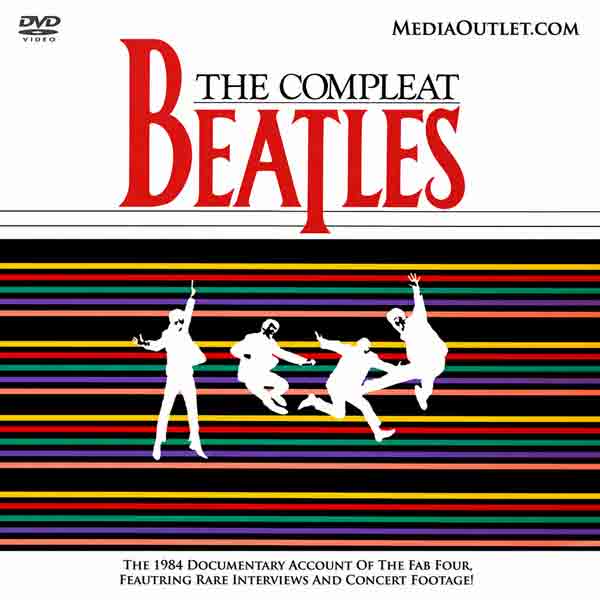
September 28, 1901: #BOTD: #HBD! Ed
Sullivan, American television host, personality and pioneer during
the early years of American television, impresario, sports and
entertainment reporter, and syndicated columnist for the New York
Daily News and the Chicago Tribune New York News Syndicate,
creator and host of the television variety program The Toast of
the Town, which in 1955 was renamed The Ed Sullivan Show.
Broadcast from 1948 to 1971, the longest-running variety show in
U.S. broadcast history (d. October 13, 1974) is #born Edward
Vincent Sullivan in Harlem, New York City. Ed Sullivan died of
esophageal cancer at New York's Lenox Hill Hospital, thinking he
was suffering from complication from a long-standing battle with
gastric ulcers due to his family concealing his condition from
him, aged 73. His funeral was attended by 2,000 people at St.
Patrick's Cathedral, New York, on a cold, rainy day.Sullivan is
interred in a crypt at the Ferncliff Cemetery in Hartsdale, New
York. Ed Sullivan was born Edward Vincent Sullivan in Harlem, New
York City. In 1996, Sullivan was ranked number 50 on TV Guide's
"50 Greatest TV Stars of All Time". Sullivan has a star
on the Hollywood Walk of Fame at 6101 Hollywood Blvd. In 1985,
Sullivan was welcomed to the Television Academy Hall of Fame. On
Sale Until Midnight Tonight PT!
https://store.earthstation1.com/the-compleat-beatles-documentary-dvd.html
Today's
EarthStation1.com 15% (Or More!) Off Commemorative Memorial Title:
The Fatal Attraction Of Adolf Hitler TV Series DVD, Download, USB
Today, September 28, 2026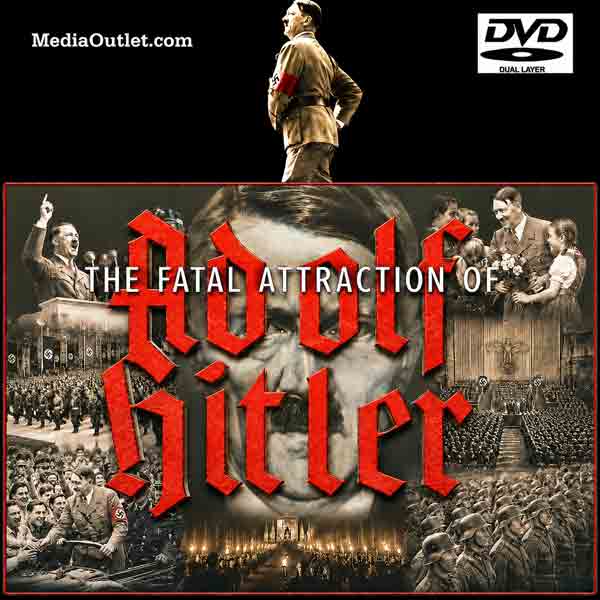
September 28, 1918: The European Civil
War: World War I: The First European War (The European Theater Of
World War I): The Western Front Of World War I: The Hundred Days
Offensive (The Grand Offensive): The Battles Of Ypres (The Battle
Of Ypres): The Fifth Battle Of Ypres (The Advance Of Flanders, The
Battle Of The Peaks of Flanders): -- A series of battles begins in
northern France and southern Belgium collectively known as The
Fifth Battle of Ypres (September 28 - October 2, 1918) begins as
part of French Marshal Ferdinand Foch's strategy of The Grand
Offensive, in which attacks were made on the German lines over as
wide a front as possible. After the German Spring Offensive of
1918 was stopped, German morale waned and the increasing numbers
of American soldiers arriving on the Western Front gave the Allies
a growing advantage over the German forces. Foch intended to
capitalize on this by sending Belgian, British and French forces
around the Ypres Salient to form the northern pincer his offensive
towards the Belgian city of Liege. During this battle, the British
lost 4,695 casualties, the Belgians had 4,500 "net"
casualties from among 2,000 killed and 10,000 ill and wounded. The
Allies advanced up to 18 miles (29 km), with an average advance of
6 miles (9.7 km) and captured 10,000 German soldiers, 300 guns and
600 machine guns. 10,000 Germans were taken prisoner along with
300 guns and 600 machine guns being captured. The total German
casualties are unkown; nevertheless, it has been reported that
Adolf Hitler was among the wounded on the German side. Although
disputed, Adolf Hitler's life was allegedly spared during this
battle by Private Henry James Tandey, British recipient of the
Victoria Cross and the second most highly decorated British
private of the First World War, when they allegedly encountered
each other at the French village of Marcoing while Tandey was
serving with the 5th Duke Of Wellington's Regiment. According to
this account, a weary German soldier wandered into Tandey's line
of fire. The enemy was wounded and did not appear to have a
weapon. Tandey chose not to shoot. The German soldier saw him
lower his rifle and nodded his thanks before wandering off. That
soldier is purported to have been Adolf Hitler. The author David
Johnson, who wrote a book on Henry Tandey, believes this story was
an urban legend. In some versions of the story, Hitler allegedly
saw a newspaper report about Tandey being awarded the VC (in
October 1918, whilst serving with the 5th Battalion Duke of
Wellington's (West Riding) Regiment), recognised him, and clipped
the article. In 1940, during the Coventry Blitz, Tandey's home was
bombed by the Luftwaffe. A journalist approached him outside his
bombed Coventry home, asking him about his alleged encounter with
Hitler. "If only I had known what he would turn out to be,"
Tandey is quoted as saying. "When I saw all the people and
women and children he had killed and wounded I was sorry to God I
let him go." On Sale Until Midnight Tonight PT!
https://store.earthstation1.com/the-fatal-attraction-of-adolf-hitler-dvd-2-part-tv-documentary-serie2.html
Today's
EarthStation1.com 15% (Or More!) Off Commemorative Memorial Title:
World War I: The War Years Documentary Series DVD, Download, USB
Drive
Today, September 28, 2026
September 28, 1841: #BOTD: Georges
Clemenceau, nicknamed "The Tiger", French journalist,
physician, and politician, 85th Prime Minister Of France during
and after The First World War (d. November 24, 1929) is #born
Georges Benjamin Clemenceau in Mouilleron-en-Pareds, France. A
leader of the Radical Party, he played a central role in the
politics of the French Third Republic. Clemenceau was first Prime
Minister from 1906 to 1909, and then again from 1917 to 1920. In
favour of a total victory over the German Empire, he militated for
the restitution of Alsace-Lorraine to France. He was one of the
principal architects of the Treaty Of Versailles at the Paris
Peace Conference of 1919. Nicknamed "Pere la Victoire"
(Father Victory) or "Le Tigre" (The Tiger), he took a
harsh position against defeated Germany, and won agreement on
Germany's payment of large sums for reparations. It is widely
believed that the harshness of the terms of the Treaty Of
Versailles that Clemenceau meted out to Germany were largely
responsible for the rise of Hitler and Nazism, which ultimately
brought about the Second World War. Georges Clemenceau died aged
88 in Paris, France and was buried in a simple grave next to his
father's at Le Colombier cemetery in Mouchamps, France. On Sale
Until Midnight Tonight PT!
https://store.earthstation1.com/world-war-i-the-war-years-dvd-4-part-french-tv-serie4.html
Today's
EarthStation1.com 15% (Or More!) Off Commemorative Memorial Title:
World News Today CBS WWII Radio News Broadcasts MP3 CD USB Flash
Drive
Today, September 28, 2026
September 28, 1901: #BOTD: #HBD! William
S. Paley, American broadcaster, chief executive who founded and
built the Columbia Broadcasting System (CBS) from a small radio
network into one of the foremost radio and television network
operations in the United States (d. October 26, 1990) is #born
William Samuel Paley in Chicago, Illinois, the son of Goldie
(Drell) and Samuel Paley. His family was Jewish, and his father
was an immigrant from Ukraine who ran a cigar company. As the
company became increasingly successful, Paley became a
millionaire, and moved his family to Philadelphia in the early
1920s. William Paley matriculated at Western Military Academy in
Alton, Illinois and later received his college degree from the
Wharton School at the University of Pennsylvania in expectation
that he would take an increasingly active role running the family
cigar business. In 1927, Paley's father, Leon Levy (Leon Levy was
married to Paley's sister, Blanche), and some business partners
bought a struggling Philadelphia-based radio network of 16
stations called the Columbia Phonographic Broadcasting System.
Samuel Paley's intention was to use his acquisition as an
advertising medium for promoting the family's cigar business,
which included the La Palina brand. Within a year, under William's
leadership, cigar sales had more than doubled, and, in 1928, the
Paley family secured majority ownership of the network from their
partners. By September 1928, Paley bought out the Louchhheim share
of CBS and became its majority owner with 51% of the business.
During Louchheim's brief regime, Columbia paid 410,000 USD to A.H.
Grebe's Atlantic Broadcasting Company for a small Brooklyn
station, WABC (no relation to the current WABC), which would
become the network's flagship station. WABC was quickly upgraded,
and the signal relocated to 860 kHz. The physical plant was
relocated also - to Steinway Hall on West 57th Street in
Manhattan, where much of CBS's programming would originate. By the
turn of 1929, the network could boast to sponsors of having 47
affiliates. Paley moved right away to put his network on a firmer
financial footing. In the fall of 1928, he entered into talks with
Adolph Zukor of Paramount Pictures, who planned to move into radio
in response to RCA's forays into motion pictures with the advent
of talkies. The deal came to fruition in September 1929: Paramount
acquired 49% of CBS in return for a block of its stock worth 3.8M
USD at the time. The agreement specified that Paramount would buy
that same stock back by March 1, 1932 for a flat 5M USD provided
CBS had earned 2M USD during 1931 and 1932. For a brief time there
was talk that the network might be renamed "Paramount Radio",
but it only lasted a month - the 1929 stock market crash sent all
stock value tumbling. It galvanized Paley and his troops, who "had
no alternative but to turn the network around and earn the 2M USD
in two years.... This is the atmosphere in which the CBS of today
was born." The near-bankrupt movie studio sold its CBS shares
back to CBS in 1932. In the first year of Paley's watch, CBS's
gross earnings more than tripled, going from 1.4M USD to 4.7M USD.
Within a decade of taking control of the company, William S. Paley
had expanded the CBS radio network to 114 affiliate stations.
During World War II, Paley served as director of radio operations
of the Psychological Warfare branch in the Office of War
Information at Allied Force Headquarters in London, where he held
the rank of colonel. While based in England during the war, Paley
came to know and befriend Edward R. Murrow, CBS's head of European
news who expanded the news division's foreign coverage with a team
of war correspondents later known as the Murrow Boys. In 1946,
Paley promoted Frank Stanton to president of CBS. CBS expanded
into TV, and rode the post-World War II boom to surpass NBC, which
had dominated radio. William S. Paley died of kidney failure in
New York City, less than a month after his 89th birthday. He was
buried at the Memorial Cemetery of St. John's Episcopal Church. On
Sale Until Midnight Tonight PT!
https://store.earthstation1.com/cbs-wwii-radio-broadcasts-world-news-today-mp3-c3.html
Today's
EarthStation1.com 15% (Or More!) Off Commemorative Memorial Title:
Clive James' Fame In The 20th Century TV Series DVD Set MP4 USB
Drive
Today, September 28, 2026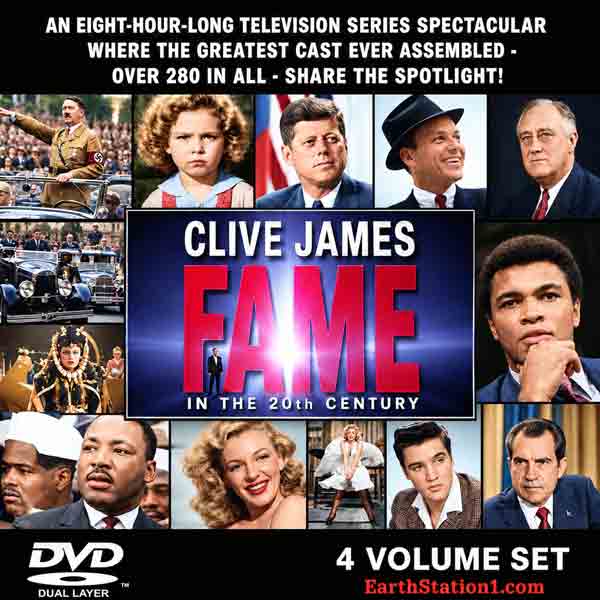
September 28, 1934: #BOTD: Brigitte
Bardot, often referred to by her initials B.B., French film
actress, singer, beauty and animal rights activist, famous for
portraying sexually emancipated personae with hedonistic
lifestyles, one of the best known sex symbols of the 1950s and
1960s who withdrew from the entertainment industry in 1973 and
remains a major pop culture icon and cultural icon, is #born
Brigitte Anne-Marie Bardot in the 15th arrondissement of Paris,
France, where she was raised. Bardot was an aspiring ballerina in
her early life. She started her acting career in 1952. She
achieved international recognition in 1957 for her role in the
controversial And God Created Woman, and also caught the attention
of French intellectuals. She was the subject of Simone de
Beauvoir's 1959 essay The Lolita Syndrome, which described her as
a "locomotive of women's history" and built upon
existentialist themes to declare her the first and most liberated
woman of post-war France. Bardot later starred in Jean-Luc
Godard's 1963 film Le Mepris. For her role in Louis Malle's 1965
film Viva Maria! she was nominated for a BAFTA Award for Best
Foreign Actress. Bardot retired from the entertainment industry in
1973. She had acted in 47 films, performed in several musicals and
recorded more than 60 songs. She was awarded the Legion of Honour
in 1985 but refused to accept it. After retiring, she became an
animal rights activist. During the 2000s, she generated
controversy by criticizing immigration and Islam in France, and
she has been fined five times for inciting racial hatred. On Sale
Until Midnight Tonight PT!
https://store.earthstation1.com/clive-james39-fame-in-the-20th-century-tv-series-dvd-set-mp4-usb-39204.html
Today's
EarthStation1.com #OnThisDay Commemorative Memorial Title: TV
Commercials: The Cable Age Classics II DVD, Download, USB Drive
Today, September 28, 2026 September 28: Fish Tank Floorshow Night:
-- It's a night dedicated to making the fish species the main
attraction. The quiet and beautiful animals in the corner of the
room take the stage for the night. Fish have been kept as pets for
so many years, and they remain a favorite choice for many amazing
reasons. Did you know watching fish is good for your health? It
helps you destress and calm down. So join us as we watch some fish
in the tank, on TV, or in the aquarium. Toss a pillow on the floor
of your living room and get ready to do some fish-watching! Fish
Tank Floorshow Night is a holiday dedicated to making fish the
center of attention for one night. It was copyrighted by Thomas
and Ruth Roy. Fish are very important to us. Not only are they a
source of food, but we also keep them as pets and they help strike
a balance in our ecosystem. Scientists believe they have existed
for over 530 million years - much longer than mammals. One of the
most primitive fish is the Haikouichthys. Fish are known for their
acute sense of smell, variety of body patterns, and high
intelligence, which they make use of while searching for food and
protecting themselves. Breeding fish began a long time ago for
different purposes. The Chinese kept carp for food and the Romans
kept fish for entertainment. The first fish to be kept as a pet
was a goldfish. This species remains the most popular choice for
pet fish as they are colorful, cheap to manage, and fun to keep.
The next most preferred fish are guppies. Small and colorful, they
are a delight to watch and easy to care for. Zebra danios,
butterflyfish, clownfish, and neon tetras are also common choices
because of their beautiful patterns. The longest living species is
the lungfish. How wonderful will it be to sit down and watch the
likes of these extraordinary creatures for one night?
https://store.earthstation1.com/tv-commercials-the-cable-age-classics-ii-dvd.html
Today's
EarthStation1.com #OnThisDay Commemorative Memorial Title: The Old
Time Radio Western MegaSet MP3 Collection DVD, Download, USB
Today, September 28, 2026September 28: World Rabies Day: -- A day
to educate yourself and others and raise awareness about the risk
of rabies, and how to prevent this deadly and incurable disease
before it takes hold. Rabies is an infectious viral disease that
is almost always fatal following the onset of clinical signs.
Because this disease impacts both animals and humans, the
veterinary and human medical profession need to work together to
combat this still avoidable disease which is still so prevalent in
Africa and some Asian countries. And working together to raise
awareness about and eradicate this disease is what World Rabies
Day is all about! World Rabies Day was founded by the Global
Alliance for Rabies Control in 2007 and it was then recognized by
the World Health Organization (WHO). The day is celebrated
annually to raise awareness about rabies prevention and to
highlight progress in defeating this horrifying disease. September
28th was chosen as the day to observe World Rabies Day each year
as it marks the anniversary of the death of Louis Pasteur, who was
the French chemist and microbiologist, who developed the first
rabies vaccine. Each year, the Global Alliance for Rabies Control
chooses a theme to celebrate World Rabies Day. The different
themes are chosen to bring to light a certain aspect of the
disease and how to eradicate it.
https://store.earthstation1.com/the-old-time-radio-western-megaset-dual-layer-mp3-dv3.html
Today's
EarthStation1.com #OnThisDay Commemorative Memorial Title:
Czechoslovakia: The Long Wait For Revolution DVD, Download, USB
Drive
Today, September 28, 2026September 28: St. Wenceslas Day (Czech
Statehood Day): -- A day to honor "Good King Wenceslas",
patron of the Czech State, and to observe Statehood Day, the Czech
Republic's national holiday in observance of him held as a public
holiday for the past two decades. Did you know that, on this day,
the archbishop of Prague brings the skull of St. Wenceslas and it
is paraded through the town of Brandys nad Labem-Stara Boleslav
where the saint was murdered? St. Wenceslas Day is also the feast
day of St. Wenceslas who was the duke of Bohemia and the patron
saint of the Czech Republic. Unfortunately, he was the victim of a
murder plot orchestrated by Boleslav, who was his own brother.
Wenceslas ruled from 922 when he was 15 years old due to his
father's death in 921. He had a vision to unify Bohemia and make
peace with Germany, however, this was met with a lot of hesitation
from his brother Boleslav and the rest of his family. In an
attempt to gain power, Boleslav murdered Wenceslas and the
families of Wenceslas's supporters. After this, Wenceslas was
venerated as a saint as he died a martyr's death. He also earned
the title of a king after his death by Holy Roman Emperor Otto I.
Thus he is the same King Wenceslas referred to in the Christmas
carol, 'Good King Wenceslas.' St. Wenceslas is a celebrated saint
and martyr, and played a significant role in cementing the dynasty
of Premyslid and the emancipation of the Czech state. Earlier, the
feast day of St. Wenceslas was always a significant day for the
Czech Republic, however, owing to the efforts of the Christian
Democratic Party, it also became a national and public holiday
(Statehood Day) in 2000 and is observed annually. It is actually
two holidays on one day but both focus on the same thing - the
creation of the Czech Republic and the patron saint who was
responsible for it. Apart from the normal celebrations, each year,
people who contribute to Czech statehood are awarded St. Wenceslas
medals at the Prague Castle where a memorial wreath is placed on
the statue of St. Wenceslas. There are even pilgrimages to Brandys
nad Labem-Stara Boleslav, where St. Wenceslas was murdered.
https://store.earthstation1.com/czechoslovakia-the-long-wait-for-spring-dvd-1988-cold1988.html
Today's
EarthStation1.com #OnThisDay Commemorative Memorial Title: A Very
Beatles Christmas All 7 Fanclub Records MP3 Set CD Download USB
Today, September 28, 2026September 28, 935 (possibly 929): #DOTD:
#RIP: Wenceslaus I, also known Vaclav the Good or Saint
Wenceslaus, patron saint of both Prague and Bohemia, Czechia
(modern Czech Republic), Duke Of Bohemia, subject of John Mason
Neale's and Thomas Helmore's 1853 Christmas carol "Good King
Wenceslas" (b. c. 907) #dies aged 27 or 28 in Stara Boleslav,
Bohemia. He is buried in Saint Vitus Cathedral in Prague. There is
a debate on whether his death was an accident or an assassination.
His younger brother, Boleslaus the Cruel, is commonly considered
by the Czech public and the Roman Catholic Church as the
perpetrator of and assassination of Wenceslaus. However, according
to some historians (e. g. Dusan Trestik or Martin Wihoda), his
death was the result of a quarrel between the two brothers or
their parties (probably after a night of drinking). Boleslaus' men
then killed Wenceslaus in the subsequent chaotic fight. His
martyrdom and the popularity of several biographies gave rise to a
reputation for heroic virtue that resulted in his elevation to
sainthood. He was posthumously declared to be a king and came to
be seen as the patron saint of the Czech state. Wenceslaus I was
born in Prague. He is the subject of the well-known "Good
King Wenceslas", a carol for Saint Stephen's Day.
https://store.earthstation1.com/a-very-beatles-christmas-all-7-fan-club-christmas-records-mp3-73.html
Today's
EarthStation1.com #OnThisDay Commemorative Memorial Title: The Old
Time Radio Drama MP3 MegaSet DVD, Audio Download, USB Stick
Today, September 28, 2026September 28, 1891: #DOTD: #RIP: Herman
Melville, American novelist, short story writer, and poet of the
American Renaissance period (b. August 1, 1819) #dies in the
morning in New York City aged 72 of what his death certificate
declares as "cardiac dilation" (cardiovascular disease).
He is interred in the Woodlawn Cemetery in the Bronx, New York
City. There were few obituaries. The New York Times's initial
death notice called his masterpiece "Mobie Dick" (sic),
which later was erroneously taken to mean that he was
unappreciated at his time of death. But there were some
appreciations. The Times, for instance, published a substantial
article of appreciation on October 2. The author said that
thinking back to Melville's books that were so much read forty
years earlier, there is "no difficulty determining why they
were then read and talked about," but the difficulty is "to
discover why they are read and talked about no longer."
Herman Melville was born Herman Melvil (sic) in New York City, the
third child of a prosperous merchant whose death in 1832 left the
family in financial straits. Among his best-known works are
Moby-Dick (1851), Typee (1846), a romanticized account of his
experiences in Polynesia, and Billy Budd, Sailor, a posthumously
published novella. Although his reputation was not high at the
time of his death, the centennial of his birth in 1919 was the
starting point of a Melville revival and Moby-Dick grew to be
considered one of the great American novels. He took to sea in
1839 as a common sailor on a merchant ship and then on the whaler
Acushnet but he jumped ship in the Marquesas Islands. Typee, his
first book, and its sequel, Omoo (1847), were travel-adventures
based on his encounters with the peoples of the island. Their
success gave him the financial security to marry Elizabeth Shaw,
the daughter of a prominent Boston family. Mardi (1849), a
romance-adventure and his first book not based on his own
experience, was not well received. Redburn (1849) and White Jacket
(1850), both tales based on his experience as a well-born young
man at sea, were given respectable reviews but did not sell well
enough to support his expanding family. Melville's growing
literary ambition showed in Moby-Dick (1851), which took nearly a
year and a half to write, but it did not find an audience and
critics scorned his psychological novel Pierre: or, The
Ambiguities (1852). From 1853 to 1856, Melville published short
fiction in magazines, including "Benito Cereno" and
"Bartleby, the Scrivener". In 1857, he traveled to
England, toured the Near East, and published his last work of
prose, The Confidence-Man (1857). He moved to New York in 1863 to
take a position as Customs Inspector. From that point, Melville
focused his creative powers on poetry. Battle-Pieces and Aspects
of the War (1866) was his poetic reflection on the moral questions
of the American Civil War. In 1867, his eldest child Malcolm died
at home from a self-inflicted gunshot. Melville's metaphysical
epic Clarel: A Poem and Pilgrimage in the Holy Land was published
in 1876. In 1886, his other son Stanwix died of apparent
tuberculosis, and Melville retired. During his last years, he
privately published two volumes of poetry, and left one volume
unpublished. The novella Billy Budd was left unfinished at his
death but was published posthumously in 1924. Melville died from
cardiovascular disease in 1891.
https://store.earthstation1.com/the-old-time-radio-drama-mp3-dvd-megase3.html
Today's
EarthStation1.com #OnThisDay Commemorative Memorial Title: Lux
Radio Theatre w/ Cecil B. DeMille MP3 Set DVD, Download, USB Drive
Today, September 28, 2026September 28, 1895: #DOTD: #RIP: Louis
Pasteur, French biologist, microbiologist and chemist renowned for
his discoveries of the principles of vaccination, microbial
fermentation and pasteurization (b. December 27, 1822) #dies in
Marnes-la-Coquette near Paris, France from the long-term effects
of a stroke and uremia, aged 72. He was given a state funeral and
was buried in the Cathedral of Notre Dame, but his remains were
reinterred in the Pasteur Institute in Paris, in a vault covered
in depictions of his accomplishments in Byzantine mosaics. Born in
Dole, France, Louis Pasteur is remembered for his remarkable
breakthroughs in the causes and prevention of diseases, and his
discoveries have saved many lives ever since. He reduced mortality
from puerperal fever, and created the first vaccines for rabies
and anthrax. His medical discoveries provided direct support for
the germ theory of disease and its application in clinical
medicine. He is best known to the general public for his invention
of the technique of treating milk and wine to stop bacterial
contamination, a process now called pasteurization. He is regarded
as one of the three main founders of bacteriology, together with
Ferdinand Cohn and Robert Koch, and is popularly known as the
"father of microbiology". Pasteur was responsible for
disproving the doctrine of spontaneous generation. He performed
experiments that showed that without contamination, microorganisms
could not develop. Under the auspices of the French Academy of
Sciences, he demonstrated that in sterilized and sealed flasks
nothing ever developed, and in sterilized but open flasks
microorganisms could grow. Although Pasteur was not the first to
propose the germ theory, his experiments indicated its correctness
and convinced most of Europe that it was true. Today, he is often
regarded as one of the fathers of germ theory. Pasteur made
significant discoveries in chemistry, most notably on the
molecular basis for the asymmetry of certain crystals and
racemization. Early in his career, his investigation of tartaric
acid, a white, crystalline organic acid that occurs naturally in
many fruits, most notably in grapes, but also in bananas,
tamarinds, and citrus, resulted in the first resolution of what is
now called optical isomers, ions or molecules with identical
formulas but distinct structures. His work led the way to the
current understanding of a fundamental principle in the structure
of organic compounds. He was the director of the Pasteur
Institute, established in 1887, until his death, and his body was
interred in a vault beneath the institute. Although Pasteur made
groundbreaking experiments, his reputation became associated with
various controversies. Historical reassessment of his notebook
revealed that he practiced deception to overcome his rivals.
https://store.earthstation1.com/complete-lux-radio-theatre-2-dual-layer-mp3-dvds-cecil-b-demil23.html
Today's
EarthStation1.com #OnThisDay Commemorative Memorial Title: The Ten
Year Lunch: Wit And Legend Of The Algonquin MP4 Download DVD
Today, September 28, 2026September 28, 1964: #DOTD: #RIP: Harpo
Marx, American comedian, actor, mime artist, musician, singer and
secret diplomatic courier for the United States (b. November 23,
1888) #dies on his 28th wedding anniversary at age 75 in a West
Los Angeles hospital, one day after undergoing heart surgery.
Harpo's death was said to have hit the surviving Marx brothers
very hard. Groucho's son Arthur Marx, who attended the funeral
with most of the Marx family, later said that Harpo's funeral was
the only time in his life that he ever saw his father cry. In his
will, Harpo Marx donated his trademark harp to the State of
Israel, where it was later used in an Israeli orchestra. His
remains were cremated at the Hollywood Forever Cemetery and a
portion of his ashes were allegedly scattered in the sand trap at
the 7th hole of a golf course in Rancho Mirage, California. He was
survived by his wife Susan, four children Bill, Alex, Jimmy, and
Minnie and younger brothers Groucho, Gummo and Zeppo. Harpo Marx
was born Adolph Marx in Manhattan, New York. Harpo was the
second-oldest of the Marx Brothers. In contrast to the mainly
verbal comedy of his brothers Groucho Marx and Chico Marx, Harpo'
comic style was visual, being an example of both clown and
pantomime traditions. He wore a curly reddish blonde wig, and
never spoke during performances (he blew a horn or whistled to
communicate). He frequently used props such as a horn cane, made
up of a lead pipe, tape, and a bulbhorn, and he played the harp in
most of his films. In 1933, following U.S. diplomatic recognition
of the Soviet Union, Harpo spent six weeks in Moscow as a
performer and goodwill ambassador. His tour was a huge success,
and the show ran for six weeks. Harpo's name was transliterated
into Russian, using the Cyrillic alphabet, as "XAPNO MAPKC,"
which is how he was billed during his Soviet Union appearances.
Harpo, having no knowledge of Russian, pronounced it as "Exapno
Mapcase". At that time, Harpo and the Soviet Foreign Minister
Maxim Litvinov became friends and even performed a routine on
stage together. During this time he served as a secret courier,
delivering communiques to and from the US embassy in Moscow at the
request of Ambassador William Christian Bullitt Jr., smuggling the
messages in and out of the Soviet Union by taping a sealed
envelope to his leg beneath his trousers. Marx recounted his
relief at his voyage's end: "I pulled up my pants, ripped off
the tape, unwound the straps, handed over the dispatches from
Ambassador Bullitt, and gave my leg its first scratch in ten
days."
https://store.earthstation1.com/the-ten-year-lunch-wit-and-legend-of-algonquin-round-table-dvd.html
Today's
EarthStation1.com #OnThisDay Commemorative Memorial Title: Forever
James Dean Biography Documentary DVD, MP4 Download, USB Drive
Today, September 28, 2026September 28, 2003: #DOTD: RIP: Elia
Kazan, Greek-American actor, film director, film producer and
screenwriter (b. September 7, 1909) #dies from natural causes in
his Manhattan apartment, aged 94. He is buried at Greenwood Union
Cemetery in Rye, New York. Born Elias Kazantzoglou in the old
Byzantine Contantinople Fener district of Istanbul, to Cappadocian
Greek parents originally from Kayseri in Anatolia, Kazan was
described by The New York Times as "one of the most honored
and influential directors in Broadway and Hollywood history".
After attending Williams College and then the Yale School of
Drama, he acted professionally for eight years, later joining the
Group Theatre in 1932, and co-founded the Actors Studio in 1947.
With Robert Lewis and Cheryl Crawford, his actors' studio
introduced "Method Acting" under the direction of Lee
Strasberg. Kazan acted in a few films, including City for Conquest
(1940). His films were concerned with personal or social issues of
special concern to him. Kazan writes, "I don't move unless I
have some empathy with the basic theme." His first such
"issue" film was Gentleman's Agreement (1947), with
Gregory Peck, which dealt with anti-Semitism in America. It
received eight Oscar nominations and three wins, including Kazan's
first for Best Director. It was followed by Pinky, one of the
first films in mainstream Hollywood to address racial prejudice
against African Americans. In 1954, he directed On the Waterfront,
a film about union corruption on the New York harbor waterfront. A
Streetcar Named Desire (1951), an adaptation of the stage play
which he had also directed, received twelve Oscar nominations,
winning four, and was Marlon Brando's breakthrough role. In 1955,
he directed John Steinbeck's East of Eden, which introduced James
Dean to movie audiences. A turning point in Kazan's career came
with his testimony as a witness before the House Committee on
Un-American Activities in 1952 at the time of the Hollywood
blacklist, which brought him strong negative reactions from many
liberal friends and colleagues. His testimony helped end the
careers of former acting colleagues Morris Carnovsky and Art
Smith, along with the work of playwright Clifford Odets. The two
men had made a pact to name each other in front of the committee.
Kazan later justified his act by saying he took "only the
more tolerable of two alternatives that were either way painful
and wrong." Nearly a half-century later, his anti-Communist
testimony continued to cause controversy. When Kazan was awarded
an honorary Oscar in 1999, dozens of actors chose not to applaud
as 250 demonstrators picketed the event. Kazan influenced the
films of the 1950s and 1960s with his provocative, issue-driven
subjects. Director Stanley Kubrick called him, "without
question, the best director we have in America, [and] capable of
performing miracles with the actors he uses." Film author Ian
Freer concludes that even "if his achievements are tainted by
political controversy, the debt Hollywood-and actors
everywhere-owes him is enormous." In 2010, Martin Scorsese
co-directed the documentary film A Letter to Elia as a personal
tribute to Kazan.
https://store.earthstation1.com/james-dean-forever-1988-biography-documentary1988.html
Today's
EarthStation1.com #OnThisDay Commemorative Memorial Title: Rhythm
And Blues Revue (1955) DVD, MP4 Video Download, USB Flash Drive
Today, September 28, 2026September 28, 1973: #DOTD: #RIP: Mantan
Moreland, African American actor and comedian most popular in the
1930s and 1940s and who starred in numerous films, who was nearly
a member of The Three Stooges (b. September 3, 1902) #dies of a
cerebral hemorrhage aged 71 in Hollywood, and is interred at
Valhalla Memorial Park Cemetery in North Hollywood, Los Angeles,
California. Mantan Moreland was born in Monroe, Louisiana, to
Frank, an old-time Dixieland bandleader, and Marcella. His
daughter Marcella Moreland appeared as a child actress in several
films. Moreland began acting by the time he was an adolescent;
some sources say he ran away to join a minstrel show in 1910, at
age eight, but his daughter told Moreland's biographer she doubts
this date is correct. She and other sources agree it is more
likely he left home when he was fourteen. After "nearly ten
years of working the small, small time", Moreland gained an
opportunity in 1927 when he was hired as a comedian in Connie's
Inn Frolics in Harlem. He next worked in the musical revue
Blackbirds of 1928, which ran for 518 performances. By the late
1920s, Moreland had made his way through vaudeville, working with
various shows and revues, performing on Broadway and touring
Europe. Following the death of Aubrey Lyles, the half of African
American vaudeville act Miller and Lyles, in 1932, Flournoy Miller
asked Moreland to team up with him for personal appearances. With
Moreland, Miller performed comedy routines he had done with Lyles.
The pair performed together in the one-reel short film That's the
Spirit (1933) as a pair of night watchmen and for stage
productions by Miller, Dixie Goes High Hat (1938) and Hollywood
Revue (1939). Moreland appeared in low-budget "race movies"
aimed at African American audiences, including One Dark Night
(1939) with Bette Treadville, Lucky Ghost (1941), Mr. Washington
Goes to Town (1941) and Mantan Runs for Mayor (1946), again with
Miller. As his comedic talents became recognized, Moreland
appeared in larger productions. At the height of his career,
Moreland received steady work from major film studios, as well as
from independent producers who starred Moreland in low-budget,
all-African American-cast comedies. Monogram Pictures signed
Moreland to appear opposite Frankie Darro in the studio's popular
action pictures. Moreland, with his bulging eyes and cackling
laugh, quickly became a favorite supporting player in Hollywood
movies. In 1940's Drums of the Desert, Moreland played a more
serious role as the sergeant in charge of a squad of Senegalese
Tirailleurs in French colonial Algeria alongside Ralph Byrd, known
for appearing in Republic Pictures' Dick Tracy serials. He is
perhaps best known for his role as chauffeur Birmingham Brown in
Monogram's Charlie Chan series. During the 1940s, he teamed up
with Ben Carter as his straight man, touring America in vaudeville
and making personal appearances in the nation's movie theaters.
Moreland and Carter performed comedy routines the former learned
when he became Flournoy Miller's understudy in the 1930s,
including the famous "indefinite talk" routine, in which
they would speak to one another, start a sentence only to be
interrupted by the other, yet they understand each other
perfectly. Moreland and Carter had developed an excellent rapport
and impeccable timing. During World War II, they performed at the
then segregated USOs such as one in Riverside, California. Their
version of "indefinite talk" can be seen in two Charlie
Chan pictures, The Scarlet Clue and Dark Alibi, as well as in the
big-budget Universal musical Bowery to Broadway. The partnership
lasted until Carter died in 1946. Moreland and Nipsey Russell
performed this routine in two all-black variety films in 1955,
including Rhythm And Blues Revue. During the second half of the
1940s, the public attitudes toward the portrayals of African
Americans in the cinema had changed. When filmmakers began to
reassess roles given to black actors, Moreland's characterization
in his film appearances was considered demeaning to the
African-American community, resulting in his being offered fewer
roles in the 1950s. Financial difficulties forced Moreland to tour
making personal appearances during the late 1940s and the early
1950s with Bud Harris, Tim Moore, Redd Foxx and Nipsey Russell as
his straight men. Mantan's biographer, Michael Price, states
Moreland was briefly considered as a possible addition to the
Three Stooges. After Shemp Howard died of a sudden heart attack on
November 22, 1955, at age 60, Moe Howard was said had been
observing Moreland's act for years and offered Moreland a chance
to join the act as the new "third stooge" at the behest
of his late brother Shemp. Moreland was reported to be
enthusiastic about the offer, but Columbia Pictures insisted on a
comedian already under contract. Joe Besser, one of a few
comedians still making comedy shorts at the studio, was eventually
recruited to join the act in 1956. Moreland's last featured role
was in the darkly humorous horror film Spider Baby (1968, filmed
in 1964), which was patterned after Universal's thrillers of the
1940s. After suffering a stroke in the early 1960s, Moreland took
on a few minor comedic roles, working with Bill Cosby, Moms Mabley
and Carl Reiner. He later partnered with Roosevelt Livingood to
form the comedic team of Mantan and Livingood, which produced a
number of recorded albums on Laff Records. In 2004, Moreland was
inducted into the National Multicultural Western Heritage Museum
Hall of Fame.
https://store.earthstation1.com/rhythm-and-blues-revue-dvd-1955-apollo-theater-tv-1955.html
Today's
EarthStation1.com #OnThisDay Commemorative Memorial Title:
Boarding House Blues 1948 Moms Mabley Dusty Fletcher MP4 Download
DVD
Today, September 28, 2026September 28, 1966: #DOTD: #RIP: Lucky
Millinder, African American swing and rhythm-and-blues bandleader
(b. August 8, 1910) #dies of a liver ailment in Harlem, New York
at the age of 56. He is buried at Ferncliff Cemetery and Mausoleum
in Hartsdale, New York. Lucky Millinder was born Lucius Venables
in Anniston, Alabama. Although he could not read or write music,
did not play an instrument and rarely sang, Lucius Venable
Millinder's showmanship and musical taste made his bands
successful. His group was reputed to have been the greatest big
band to play rhythm and blues, and he gave work to a number of
musicians who later became influential at the dawn of the rock and
roll era. He was inducted into the Alabama Jazz Hall of Fame in
1986.
https://store.earthstation1.com/boarding-house-blues-dvd-moms-mabley-dusty-fletcher-race-film.html
Today's
EarthStation1.com #OnThisDay Commemorative Memorial Title: Miles
Ahead: The Music Of Miles Davis DVD, Video Download, Flash Drive
Today, September 28, 2026September 28, 1991: #DOTD: #RIP: Miles
Davis, American jazz trumpet player, composer, and bandleader, one
of the most influential and acclaimed figures in the history of
jazz and 20th century music who adopted a variety of musical
directions in a five-decade career that kept him at the forefront
of many major stylistic developments in jazz (b. May 26, 1926)
#dies in Santa Monica, California aged 65 from the combined
effects of a stroke, pneumonia and respiratory failure. A funeral
service was held on October 5, 1991, at St. Peter's Lutheran
Church on Lexington Avenue in New York City that was attended by
around 500 friends, family members, and musical acquaintances,
with many fans standing in the rain. He is buried in Woodlawn
Cemetery in the Bronx, New York City, with one of his trumpets,
near the site of Duke Ellington's grave. Miles Davis was born
Miles Dewey Davis III in Alton, Illinois, where he was raised.
Davis left to study at the Juilliard School in New York City,
before dropping out and making his professional debut as a member
of saxophonist Charlie Parker's bebop quintet from 1944 to 1948.
Shortly after, he recorded the Birth of the Cool sessions for
Capitol Records, which were instrumental to the development of
cool jazz. In the early 1950s, Miles Davis recorded some of the
earliest hard bop music while on Prestige Records but did so
haphazardly due to a heroin addiction. After a widely acclaimed
comeback performance at the Newport Jazz Festival in 1955, he
signed a long-term contract with Columbia Records and recorded the
1957 album 'Round About Midnight. It was his first work with
saxophonist John Coltrane and bassist Paul Chambers, key members
of the sextet he led into the early 1960s. During this period, he
alternated between orchestral jazz collaborations with arranger
Gil Evans, such as the Spanish-influenced Sketches of Spain
(1960), and band recordings, such as Milestones (1958) and Kind of
Blue (1959). The latter recording remains one of the most popular
jazz albums of all time, having sold over four million copies in
the U.S. Davis made several line-up changes while recording
Someday My Prince Will Come (1961), his 1961 Blackhawk concerts,
and Seven Steps to Heaven (1963), another mainstream success that
introduced bassist Ron Carter, pianist Herbie Hancock, and drummer
Tony Williams. After adding saxophonist Wayne Shorter to his new
quintet in 1964, Davis led them on a series of more abstract
recordings often composed by the band members, helping pioneer the
post-bop genre with albums such as E.S.P (1965) and Miles Smiles
(1967),[5] before transitioning into his electric period. During
the 1970s, he experimented with rock, funk, African rhythms,
emerging electronic music technology, and an ever-changing line-up
of musicians, including keyboardist Joe Zawinul, drummer Al
Foster, and guitarist John McLaughlin. This period, beginning with
Davis' 1969 studio album In a Silent Way and concluding with the
1975 concert recording Agharta, was the most controversial in his
career, alienating and challenging many in jazz. His
million-selling 1970 record Bitches Brew helped spark a resurgence
in the genre's commercial popularity with jazz fusion as the
decade progressed. After a five-year retirement due to poor
health, Davis resumed his career in the 1980s, employing younger
musicians and pop sounds on albums such as The Man with the Horn
(1981) and Tutu (1986). Critics were generally unreceptive but the
decade garnered the trumpeter his highest level of commercial
recognition. He performed sold-out concerts worldwide while
branching out into visual arts, film, and television work.
https://store.earthstation1.com/miles-ahead-the-music-of-miles-davis-dvd.html
Today's
EarthStation1.com #OnThisDay Commemorative Memorial Title: The
Fabulous Sixties with Peter Jennings TV Docuseries MP4 Or DVD Set
Today, September 28, 2026September 28, 2000: #DOTD: #RIP: Pierre
Trudeau, Canadian politician, lawyer, jurist, academic, author,
and journalist who served as the 15th prime minister of Canada
from 1968 to 1979 and from 1980 to 1984, leader from 1979 to 1980
of the Opposition between his non-consecutive terms as prime
minister, leader of the Liberal Party from 1968 until 1984 (b.
October 18, 1919) #dies at his Montreal, Canada home aged 80.
Trudeau succumbed to several health complications; his death has
been attributed to his prostate cancer, Parkinson's disease, a
prior battle with pneumonia, as well as the depression felt
following his youngest son Michel's death in 1998. At the time of
his death, he was surrounded by his former wife Margaret as well
as his sons Justin and Sacha. Following his death, Trudeau's
casket lay in state in the Hall of Honour in Parliament Hill's
Centre Block from September 30 to October 1, 2000.[201] His
funeral took place on October 3, 2000, at the Notre-Dame Basilica
in Montreal.[202] Several world politicians, including U.S.
president Jimmy Carter and Cuban leader Fidel Castro, attended the
funeral.[201] His son Justin delivered the eulogy during the state
funeral, which led to widespread, and ultimately correct,
speculation in the media that a career in politics was in his
future.[201] Pierre Elliot Trudeau was interred in the Trudeau
family mausoleum at St-Remi-de-Napierville Cemetery in Saint-Remi,
Quebec.[203][204] Per his family's wishes, the burial was private
and attended only by immediate family and friends. Trudeau was
born Joseph Philippe Pierre Yves Elliott Trudeau and was raised in
Outremont, Quebec, Canada. In 1950, he co-founded Cite Libre and
rose to prominence as a labour activist in Quebec politics by
opposing the conservative Union Nationale government. Trudeau was
also an associate professor of law at the Universite de Montreal.
He was originally part of the social democratic New Democratic
Party (NDP), but then joined the Liberal Party in 1965 on the
belief that the NDP could not achieve power. In the election that
year, he was elected to the House of Commons, and was quickly
appointed as prime minister Lester B. Pearson's parliamentary
secretary. Trudeau was minister of justice and attorney general
from 1967 to 1968, during which time he liberalized divorce and
abortion laws and decriminalized homosexuality. His outgoing
personality and charisma caused a sensation, termed
"Trudeaumania", which helped him win the leadership of
the Liberal Party in 1968. He then succeeded Pearson and became
prime minister of Canada. From the late 1960s until the mid-1980s,
Trudeau dominated the Canadian political scene. After his
appointment as prime minister, he led the Liberals to victory in
the 1968, 1972, and 1974 federal elections, before narrowly losing
in 1979. He won a fourth election victory shortly afterwards, in
1980. Trudeau is the most recent prime minister to win four
federal elections (having won three majority governments and one
minority government) and to serve non-consecutive terms. His
tenure of 15 years and 164 days makes him the third
longest-serving prime minister in Canadian history, behind John A.
Macdonald and William Lyon Mackenzie King. As prime minister,
Trudeau pioneered official bilingualism and multiculturalism. Amid
the Quebec sovereignty movement, he invoked the War Measures Act
in response to the 1970 October Crisis and later led the
federalist campaign to victory in the 1980 Quebec
sovereignty-association referendum. In economic policy, he
introduced the capital gains tax, expanded social programs,
sharply increased deficit spending, and responded to the 1970s
recession through wage and price controls. In a bid to move the
Liberal Party towards economic nationalism, Trudeau established
Petro-Canada and launched the National Energy Program, both of
which generated significant controversy in oil-rich Western Canada
and led to a rise in what was called "Western alienation".
Trudeau's government also converted Canada to the metric system,
created Via Rail, and enacted the Access to Information Act and
the Canada Health Act. In foreign policy, Trudeau reduced
alignment with the United States, maintained cordial relations
with the Soviet Union, and developed strong ties with China and
Cuban leader Fidel Castro, which put him at odds with other
Western capitalist states. He also oversaw Canada's entry into the
G7 forum. In 1982, Trudeau patriated the Constitution of Canada
and established the Canadian Charter of Rights and Freedoms with
the Constitution Act, 1982, which achieved full Canadian
sovereignty. Trudeau retired from politics shortly before the 1984
federal election. In his retirement, he practised law at the
Montreal law firm of Heenan Blaikie. He also spoke out against the
Meech Lake and Charlottetown accords (which proposed granting
Quebec certain concessions), arguing they would strengthen Quebec
nationalism. Trudeau died in 2000, aged 80. He is ranked highly
among scholars in historical rankings of Canadian prime ministers,
but remains a divisive figure in Canadian politics. Critics
accused him of arrogance, economic mismanagement, and unduly
centralizing Canadian decision-making to the detriment of the
culture of Quebec and the economy of the Prairies,[1] while
admirers praised what they considered to be the force of his
intellect[2] and his political acumen which maintained national
unity throughout the Quebec sovereignty movement. Trudeau's eldest
son, Justin Trudeau, served as prime minister of Canada from 2015
to 2025, and was the first prime minister to be the child of a
previous prime minister.
https://store.earthstation1.com/decades-the-1960s-dvd-set-peter-jennings-tv-series-3-19603.html
Today's
EarthStation1.com #OnThisDay Commemorative Memorial Title:
American Hot Wax (1978) DVD, MP4 Video Download, USB Flash Drive
Today, September 28, 2026September 28, 2015: #DOTD: #RIP: Frankie
Ford, American rock and roll and rhythm and blues singer, best
known for his 1959 hit "Sea Cruise" (b. August 4, 1939)
#dies in Gretna, Louisiana at the age of 76 on September 28, 2015,
following a long illness. He is buried at Westlawn Memorial Park
And Mausoleum in Gretna. Frankie Ford was born Vincent Francis
Guzzo, Jr. in Gretna, Louisiana, across the Mississippi River from
New Orleans, and was the adopted son of Vincent and Anna Guzzo,
who named him Vincent Francis Guzzo, Jr. He learned to sing and
dance at an early age, and when at high school joined a group, the
Syncopators, as singer and pianist. He was spotted by manager Joe
Caronna, who took him to Johnny Vincent of Ace Records. Taking the
stage name Frankie Ford, he made his first recordings for Ace in
1958. He toured locally in Louisiana, before recording a vocal
overdub on the song "Sea Cruise", a song written and
originally recorded by Huey "Piano" Smith with his
group, The Clowns, and featuring overdubbed bells and ships'
horns. As Smith already had a record in the charts, and was away
touring, the record label decided to release Ford's version, and
it rose to #14 on the US pop chart and #11 on the R & B chart,
selling over one million copies, and gaining gold disc status.
Ford toured widely around the US, but his later records were less
successful, with his versions of "Alimony" and "Time
After Time" only reaching the lower reaches of the national
charts. He also recorded a novelty record in praise of a local TV
presenter, "Morgus the Magnificent", with musicians
including Mac Rebennack and Jerry Byrne, but it failed to sell.
Ace released an LP by Ford, Let's Take A Sea Cruise With Frankie
Ford, before the singer moved to Imperial Records in late 1960. He
recorded with producer Dave Bartholomew, and released a version of
"You Talk Too Much", but Ford's recording missed out in
competition with one by Joe Jones which was issued almost
simultaneously. In 1961, his version of Boyd Bennett's 1955 hit
"Seventeen" was Ford's last chart entry. Ford was
drafted in 1962, and performed for troops in Japan, Vietnam and
Korea. He later recorded occasionally for small labels, but mainly
performed in clubs in and around New Orleans. He appeared in the
1978 movie American Hot Wax, and toured in Britain and Europe,
recording the album New Orleans Dynamo in London in 1989. He
continued to record and perform through the 1990s. Ford co-owned
the Briarmeade record label, which issued several singles and
albums by him from the 1970s to the 2000s. On May 16, 2010, at the
Louisiana Music Homecoming in Erwinville, Ford was inducted into
the Louisiana Music Hall of Fame.
https://store.earthstation1.com/american-hot-wax-1978-dvd-alan-freed-rock-39n39-ro19783939.html
Today's
EarthStation1.com #OnThisDay Commemorative Memorial Title: DJ
Madness! 1950s-60s-70s Radio Shows DVD, MP3 Download, USB Drive
Today, September 28, 2026September 28, 1968: #DOTD: #RIP: Dewey
Phillips, also known as Daddy-O Phillips, American soldier, rock
and roll disc jockey pioneer (b. May 13, 1926) #dies of heart
failurein Memphis, Tennessee at age 42. He is buried in Hardin
County, Tennessee, at Crump Cemetery. Born in Crump, Tennessee,
his radio format ran along the lines of Cleveland's Alan Freed,
before Freed came along. On July 10, 1954, he was the first DJ to
broadcast the young Elvis Presley's debut record, "That's All
Right/Blue Moon Of Kentucky" (Sun 209). Phillips got Presley
to reveal his race in an interview by asking which high school the
19-year-old singer attended (knowing that, because of segregation,
his audience would readily know what race attended which schools).
Phillips spent his childhood in Adamsville. After serving in the
Army during World War II, seeing action in the Battle of Huertgen
Forest, he moved to Memphis. He started his radio career in 1949
on WHBQ/560 in Memphis with a special studio at the Gayoso Hotel.
In 1953 WHBQ moved to the mezzanine floor of the Chisca Hotel.
Dewey Phillips was the city's leading radio personality for nine
years and was the first to simulcast his "Red, Hot &
Blue" show on radio and television. During the 1950s he had
100,000 listeners to his 9pm-midnight slot and he received 3,000
letters a week. Phillips' on-air persona was a speed-crazed
hillbilly, with a frantic delivery and entertaining sense of
humor. He also had a keen ear for music the listening public would
enjoy, and he aired both black and white music, which was abundant
in post-World War II Memphis, a booming river city which attracted
large numbers of rural blacks and whites (along with their musical
traditions). Dr.W. Herbert Brewster, pastor of East Trigg Baptist
Church was a frequent guest on Dewey's program. He played a great
deal of rhythm and blues, country music, boogie-woogie, and jazz
as well as Sun Records artists. In 1950, Phillips and his friend
Sam Phillips (no relation) decided to launch their own record
label. Joe Hill Louis waxed an electric blues single, "Boogie
in the Park" (recorded in July 1950 and released the
following month). It was the only record released on the Phillips
label before Sam founded Sun Records. Dewey Phillips was bringing
Black Music to segregated Memphis before Alan Freed did the same
as Moon Dog,in Cleveland. Phillips briefly hosted an afternoon
program on WHBQ-TV/13 in the mid-1950s, before Dick Clark took
over Philadelphia Bandstand then American Bandstand on WFIL-TV. It
mostly consisted of Phillips playing records while he and others
clowned around in front of the camera. Though Phillips was not
involved in the payola scandals of the time (as was Freed), he was
fired in late 1958 when the station adopted a Top 40 format,
phasing out his freeform style. He had Sam Phillips and three
other friends, Wink Martindale, T.L. Meade,and Sonny Gilmore to
bail him out and keep him steady as work and recognition faded. He
spent the last decade of his life working at smaller radio
stations, seldom lasting long. The popular musical Memphis is said
to be based loosely on Dewey Phillips' life and career, although
elements crucial in the career of Phillips' contemporary Alan
Freed appear to be intermixed as well. A heavy drinker and
longtime drug user (primarily painkillers and amphetamines, which
contributed to his manic on-air behavior), Phillips died of heart
failure at age 42. He is buried in Hardin County, Tennessee, at
Crump Cemetery.
https://store.earthstation1.com/dj-radio-airchecks-mp3-dvd-1950s60s70s-dis319506070.html
Today's
EarthStation1.com #OnThisDay Commemorative Memorial Title: WABC
Radio Airchecks MP3 Collection 1960s-1980s DVD, MP3 Download, USB
Today, September 28, 2026September 28, 2004: #DOTD: #RIP: Scott
Muni, American disc jockey, who worked at the heyday of the AM Top
40 format and then was a pioneer of FM progressive rock radio (b.
May 10, 1929) #dies at the age of 74 in New York City and is
buried in St. Gertrude's Roman Catholic Cemetery in Colonia, New
Jersey. Muni is included in an exhibit display of important disc
jockeys at the Rock and Roll Hall of Fame. The DJs at Q104.3 keep
Muni's promise to New York listeners and still start their noon
hour with the "12 o'clock Beatles Block". Muni was
inducted into the Rock Radio Hall of Fame in the "Legends of
Rock Radio-Programming" category for his work at WNEW in
2014. He was inducted into the National Radio Hall of Fame in
2015. Scott Muni was born Donald Allen Munoz in Wichita, Kansas.
(Th 5/10/18: Although Wikipedia gives his birth year as 1930,
Zachary Taylor Martin, Muni's last producer at Q1043, and Charlie
Kendall, who saw his FCC license, indicate he was in fact born in
1929, according to their posts in the WNEW-FM Fan Club Facebook
page). Muni grew up in New Orleans. He joined the United States
Marine Corps and began broadcasting there in 1950, reading "Dear
John" letters over Radio Guam. After leaving the Corps and
having considered acting as a career, he began working as a disc
jockey; in 1953 he began working at WSMB in New Orleans. His
mentor was Marshall Pearce. In 1955 he took over for Alan Freed at
station WAKR in Akron, Ohio, and after that worked in Kankakee,
Illinois. Muni then spent almost 50 years at stations in New York
City. He became a Top 40 broadcaster at 570 WMCA in the late
1950s, just before the start of their "Good Guys" era,
and did a number of record hops in the New York area. In 1960, he
moved to rival Top 40 station 770 WABC. There he did an early
evening show called "Scotland's Yard" and was among the
first WABC DJs to capture the attention of the teenage audience
for which the station would become famous. He also participated in
the competition to cover The Beatles on their first visits to the
United States, and thus began a long association with them. In
1965, Muni left WABC and ran the Rolling Stone Night Club while
doing occasional fill-in work for WMCA. Muni had explored some
opportunities beyond radio: for a short time he co-hosted a local
weekly television show on WABC-TV 7 with Bruce "Cousin
Brucie" Morrow, and he would go on to record the spoken
single "Letter to an Unborn Child", about a soldier with
a premonition, which was released in 1967 to little acclaim. Muni
decided to return to radio, and in 1966, he joined 98.7 WOR-FM,
one of the earliest stations in the country to program free-form
Progressive Rock music. The progressive format did not last at
that station. In 1967 Muni moved to 102.7 WNEW-FM, which had been
running a format of pop hits and show tunes, hosted by an
all-woman staff. This time, the Progressive Rock format really
took hold, with WNEW-FM becoming a legendary rock station. Muni
stayed there for three decades as the afternoon DJ and sometimes
program director. Muni was described by fellow WNEW-FM DJ Dennis
Elsas as "the heart and soul of the place". Under
assorted management changes during the 1990s WNEW-FM lost its way,
and in 1998 Muni ended up hosting a one-hour noontime classic rock
program at WAXQ "Q104.3", where he worked until
suffering a stroke in early 2004. Muni was known to his listeners
by the nicknames "Scottso" or "The Professor",
the latter to emphasize his rock expertise. While he sometimes
spoke in roundabout phrases and succumbed to progressive rock
radio cliches such as "That was a tasty cut from ...",
he also conveyed on the air and in his professional relationships
a gruff immediacy that was a by-product of both his time in the
Marines and his earlier Top 40 skills. His low, gravelly voice was
instantly recognizable and often lampooned, both by other disc
jockeys and by impressionists such as on Imus in the Morning. A
bizarre exchange occurred in August 1972 when a hostage-holding
bank robber called Muni on the air and engaged him in a long,
often nonsensical conversation; the two peppered their post-hippie
speech with discussions of Bob Dylan music and requests to hear
the Grateful Dead. The incident became part of the inspiration for
the 1975 film Dog Day Afternoon. Muni specialized in playing
records from up-and-coming, or sometimes just-plain-obscure, acts
from the United Kingdom on his weekly Friday "Things from
England" segment. He also hosted the syndicated radio
programs Ticket to Ride and Scott Muni's World of Rock. Muni was
friendly with many of the musicians whom he played, and they would
often stop by the studio to visit on-air. He played poker in the
studio with the Grateful Dead, and he would let Emerson, Lake and
Palmer browse the station's huge record library and put on
whatever they liked. An oft-related story tells that he was
interviewing Jimmy Page when the guitarist suddenly passed out
from the aftereffects of the Led Zeppelin lifestyle. Muni calmly
put on a record, revived Page, and completed the interview on the
studio floor. Muni was close to John Lennon and his family, and
after Lennon's murder he vowed to always open his show with a
Lennon or Beatles record, a pledge that he kept for the balance of
his career.
https://store.earthstation1.com/wabc-musicradio-shows-mp3-dvd-60s80s-am-360807775.html
Today's
EarthStation1.com #OnThisDay Commemorative Memorial Title: In
Country: Songs Of The Vietnam War Kris Kristofferson Download DVD
Today, September 28, 2026September 28, 2024: #DOTD: #RIP: Kris
Kristofferson, American singer-songwriter, guitarist, and actor
(b. June 22, 1936) #dies at his home in Maui, Hawaii, aged 88.
Kristofferson said that he would like the first three lines of
Leonard Cohen's "Bird on the Wire" on his tombstone:
"Like a bird on the wire | Like a drunk in a midnight choir |
I have tried in my way to be free". Despite this statement,
his remains were cremated; at his request, he had no public
funeral, but rather a private service, after which his ashes were
retained by his widow Lisa Meyers. Kris Kristofferson was born
Kristoffer Kristofferson in Brownsville, Texas, to Mary Ann (nee
Ashbrook) and Lars Henry Kristofferson, a U.S. Army Air Corps
officer (later a U.S. Air Force major general). Among his
songwriting credits are the songs "Me and Bobby McGee",
"For the Good Times", "Sunday Mornin' Comin' Down",
and "Help Me Make It Through the Night", all of which
were hits for other artists. Kristofferson composed his own songs
and collaborated with Nashville songwriters such as Shel
Silverstein. In 1985, Kristofferson joined fellow country artists
Waylon Jennings, Willie Nelson and Johnny Cash in forming the
country music supergroup The Highwaymen, and formed a key creative
force in the outlaw country music movement that eschewed the
Nashville music machine in favor of independent songwriting and
producing. In 2004, Kristofferson was inducted into the Country
Music Hall of Fame. As an actor, he is known for his roles in Pat
Garrett & Billy The Kid (1973), Blume in Love (1973), Alice
Doesn't Live Here Anymore (1974), A Star Is Born (1976) (which
earned him a Golden Globe Award for Best Actor), Convoy (1978),
Heaven's Gate (1980) and Blade (1998). In 1961, Kristofferson
married his longtime girlfriend, Frances "Fran" Mavia
Beer, eventually divorcing. Kristofferson briefly dated Janis
Joplin before her death in October 1970; he wrote the song "Me
And Bobby McGee", released by Janis Joplin posthumously, the
second posthumously released No. 1 single in U.S. chart history
after "(Sittin' On) The Dock of the Bay" by Otis
Redding. His second marriage was to singer Rita Coolidge in 1973,
ending in divorce by 1980. Kristofferson then married Lisa Meyers
in 1983, to whom he remained married for the rest of his life.
Kristofferson and Meyers owned a home in Los Flores Canyon in
Malibu, California, and maintain a residence in Hana on the island
of Maui. Kristofferson had eight children from his three
marriages: two from his first marriage to Fran Beer; one from his
second marriage to Rita Coolidge and five from his marriage to his
third wife, Lisa (nee Meyers) Kristofferson.
https://store.earthstation1.com/in-country-songs-of-the-vietnam-war-kris-kristofferson-download-dvd.html
Today's
EarthStation1.com #OnThisDay Commemorative Memorial Title:
Brother, Can You Spare A Dime? (1975) DVD, Video Download, USB
Drive
Today, September 28, 2026September 28, 1905: #BOTD: #HBD! Max
Schmeling, German boxer German boxer who was heavyweight champion
of the world between 1930 and 1932 (d. February 2, 2005) is #born
Maximillian Adolph Otto Siegfried Schmeling in Klein Luckow,
Province of Brandenburg, Prussia, German Empire. Max Schmeling had
two fights with Joe Louis, in 1936 and 1938, which were worldwide
cultural events because of their racial and national associations.
Starting his professional career in 1924, Schmeling went to the
United States in 1928 and, after a ninth-round technical knockout
of Johnny Risko, became a sensation. He became the first to win
the heavyweight championship (at that time vacant) by
disqualification in 1930, after opponent Jack Sharkey knocked him
down with a low blow in the fourth round. Schmeling retained his
crown successfully in 1931 by a technical knockout victory over
Young Stribling. A rematch in 1932 with Sharkey saw the American
gaining the title from Schmeling by a controversial fifteen-round
split decision. In 1933, Schmeling lost to Max Baer by a
tenth-round technical knockout. The loss left people believing
that Schmeling was past his prime. Meanwhile, Adolf Hitler and the
Nazi Party took over control in Germany, and Schmeling came to be
viewed as a Nazi puppet. In 1936, Schmeling knocked out American
rising star Joe Louis, placing him as the number one contender for
Jim Braddock's title, but Louis got the fight and knocked Braddock
out to win the championship in 1937. Schmeling finally got a
chance to regain his title in 1938, but Louis knocked him out in
one round. When he returned to Germany after his defeat by Joe
Louis, Schmeling was now shunned by the Nazis. He won both the
German and European heavyweight championships on the same night,
with a first-round knockout of Adolf Heuser. During the Nazi purge
of Jews from Berlin, he personally saved the lives of two Jewish
children by hiding them in his apartment. It was not the first
time that Schmeling defied the Nazi regime's hatred for Jews. As
the story goes, Hitler let it be known through the Reich Ministry
of Sports that he was very displeased at Schmeling's relationship
with Joe Jacobs, his Jewish fight promoter, and wanted it
terminated, but Schmeling refused to bow even to Hitler. During
the war, Schmeling was drafted, where he served with the Luftwaffe
as an elite paratrooper. He participated in the Battle of Crete in
May 1941, where he was wounded in his right knee by mortar fire
shrapnel during the first day of the battle. After recovering, he
was dismissed from active service after being deemed medically
unfit for duty because of his injury. Nevertheless, in July 1944 a
rumor that he had been killed in action made world news. He later
visited American POW camps in Germany and occasionally tried to
help conditions for the prisoners. By early 1945, he was spending
his time giving exhibition bouts against former British Free Corps
member Eric Pleasants in German officers' messes. After the war,
Schmeling settled in Hamburg where in 1947, strapped for money, he
embarked upon a moderately successful comeback in boxing, winning
three of his five bouts with two point-defeats before re-entering
retirement for good in October 1948. Schmeling became a successful
mink, chicken, and tobacco farmer in the early 1950s. Towards the
end of the decade, after multiple meetings with The Coca-Cola
Company's offices in Germany, Schmeling became the face of
'Cocacolonization' and Coca-Cola's reentry into Germany. Before
long, he owned his own bottling plant and held an executive's
position within the company. Schmeling helped bring vending
machines into use in Germany. After the war, he became friends
with Joe Louis, and their friendship lasted until the latter's
death in 1981; Schmeling assisted his former rival financially in
his later years, eventually financing his funeral. His wife of 54
years, the Czech-born actress Anny Ondra, died in 1987. In 1992,
he was inducted into the International Boxing Hall of Fame. His
autobiography, Max Schmeling: An Autobiography, was published in
1994. He lived his remaining years as a wealthy man and avid
boxing fan, dying at the age of 99 of natural causes in
Hollenstedt, Germany, a sporting hero in his native Germany. He is
buried at Saint Andreas Friedhof in Hollenstedt, where in 2010 a
bronze statue of Schmeling was erected in his honor. In 2003,
Schmeling was ranked 55 on The Ring magazine's list of 100
greatest punchers of all time.
https://store.earthstation1.com/brother-can-you-spare-a-dime-1975-great-depression-films1975.html
Today's
EarthStation1.com #OnThisDay Commemorative Memorial Title: And
Away We Go! US Cars + Bonus Internal Combusion Engine MP4 DVD
Today, September 28, 2026September 28, 1938: #DOTD: #RIP: Charles
Duryea, American engineer and businessman, co-founder of the
Duryea Motor Wagon Company (b. December 15, 1861) #dies in
Philadelphia, Pennsylvania of a heart attack, aged aged 76. He is
buried in Ivy Hill Cemetery, West Oak Lane. Charles Duryea was
born near Canton, Illinois, the son of George Washington Duryea
and Louisa Melvina Turner, and spent most of his life working in
Springfield, Massachusetts. Charles Duryea claims that on April
19, 1892 he and his brother, Frank, produced and road-tested
America's first gasoline-powered car; other sources say that in
fact occurred on September 21, 1893, and suggest that the April
19, 1892 date was chosen by Charles Duryea to spite his brother
Frank, with whom he entered into a business rivalry. It is
generally accepted that on September 21, 1893 they did in fact
road-test the first-ever, working American gasoline-powered
automobile on the Howard Bemis farm in Chicopee, Massachusetts.
The Duryea's "motor wagon" was a used horse drawn buggy
that the brothers had purchased for 70 USD and into which they had
installed a 4 HP, single cylinder gasoline engine. The car (buggy)
had a friction transmission, spray carburetor and low tension
ignition. Frank Duryea test drove it again on November 10, this
time in a prominent location: past their garage at 47 Taylor
Street in Springfield. The next day it was reported by The
Republican newspaper with great fanfare. This particular car was
put into storage in 1894 and stayed there until 1920, when it was
rescued by a former Duryea engineer Inglis M. Uppercu and
presented to the United States National Museum. Charles Duryea was
inducted into the Automotive Hall of Fame in 1973.
https://store.earthstation1.com/and-away-we-go-american-automobile-history-dvd.html
Today's
EarthStation1.com #OnThisDay Commemorative Memorial Title: Wings
Over The World: Aviation History Series DVD, Download, USB Drive
Today, September 28, 2026September 28, 1956: #DOTD: William
Boeing, American businessman, founder of the Boeing Company, and
racist (b. October 1, 1881) #dies at the age of 74, just three
days before his 75th birthday, and a year before the first
successful commercial jet airliner, the Boeing 707, would take its
first flight. He was pronounced dead on arrival at the Seattle
Yacht Club, having had a heart attack aboard his yacht in Puget
Sound, Washington. His ashes were scattered off the coast of
British Columbia, where he spent much of his time sailing his
yacht, The Taconite. He was posthumously inducted into the
Aviation Hall of Fame in Dayton, Ohio, in 1966. In 1984, Boeing
was inducted into the International Air and Space Hall of Fame at
the San Diego Air and Space Museum. William Boeing was born in
Detroit, Michigan to Marie M. Ortmann, from Vienna, Austria, and
Wilhelm Boing (1846-1890) from Hagen-Hohenlimburg, Germany. From a
successful family, Wilhelm Boing emigrated to the United States in
1868 and initially worked as a laborer. His move to America was
not popular with his father and he received no financial support.
He later made a fortune from North Woods timber lands and mineral
rights near Lake Superior. In 1890, at age eight, the younger
Boeing lost his father to influenza, and his mother soon
remarried. He attended school in Europe at Vevey, Switzerland, and
returned to the U.S. for a year of prep school in Boston. He
anglicized his name to "William Boeing" and enrolled at
Yale University in New Haven, Connecticut. He left Yale in 1903
before graduating to go into the lumber business. Boeing moved to
the Pacific Northwest at Hoquiam, Washington, and purchased
extensive timberlands around Grays Harbor on the Pacific (west)
side of the Olympic Peninsula and also bought into lumber
operations. He made a success of the venture, in part by shipping
lumber to the East Coast via the new Panama Canal, generating
funds that he would later apply to a very different business.
While president of Greenwood Timber Company, Boeing, who had
experimented with boat design, traveled to Seattle, where, during
the Alaska-Yukon-Pacific Exposition in 1909, he saw a manned
flying machine for the first time and became fascinated with
aircraft. Boeing decided to take lessons at the Glenn L. Martin
Flying School in Los Angeles and he purchased one of Martin's
planes. Martin pilot James Floyd Smith traveled to Seattle to
assemble Boeing's new Martin TA hydroaeroplane and continue to
teach its owner to fly. Huge crates arrived by train, and Smith
assembled the plane in a tent hangar erected on the shore of Lake
Union. William Boeing became a pilot. Boeing's test pilot, Herb
Munter, soon damaged the plane. When he was told by Martin that
replacement parts would not become available for months, Boeing
told his friend Cdr. George Conrad Westervelt (USN), "We
could build a better plane ourselves and build it faster".
Westervelt agreed. They soon built and flew the B and W Seaplane,
an amphibian biplane that had outstanding performance. Boeing
decided to go into the aircraft business and bought an old boat
works on the Duwamish River near Seattle for his factory. In 1916,
Boeing went into business with George Conrad Westervelt as "B
and W" and founded the Pacific Aero Products Co. The
company's first plane was the Boeing Model 1 (B and W Seaplane).
When America entered the First World War on April 8, 1917, a
little more than a month later, Boeing changed the name from
Pacific Aero Products Co. to Boeing Airplane Company and obtained
orders from the U.S. Navy for 50 planes. At the end of the war,
Boeing began to concentrate on commercial aircraft. He secured
contracts to supply airmail service, and built a successful
airmail operation and later passenger service that evolved into
United Airlines. In 1921, Boeing married Bertha Marie Potter
Paschall (1891-1977). She had previously been married to Nathaniel
Paschall, a real estate broker with whom she had two sons,
Nathaniel "Nat" Paschall Jr. and Cranston Paschall, and
these two became Boeing's stepsons. The couple had a son of their
own, William E. Boeing Jr. (1922-2015). The stepsons went into
aviation manufacturing as a career. Nat Paschall was a sales
manager for competitor Douglas Aircraft, later McDonnell Douglas.
Bill Jr. became a noted private pilot and industrial real estate
developer. Bertha Potter Paschall Boeing was the daughter of
Howard Cranston Potter and Alice Kershaw Potter. Through her
father, Bertha was a descendant of merchant bankers Alexander
Brown of Baltimore, James Brown and Brown's son-in-law and partner
Howard Potter of New York; and through her mother, the
granddaughter of Charles James Kershaw and Mary Leavenworth
Kershaw (a descendant of Henry Leavenworth). In 1929, Boeing
joined with Frederick Rentschler of Pratt and Whitney to form
United Aircraft and Transport Corporation. The new grouping was a
vertically integrated company with interests in all aspects of
aviation, intending to serve all aviation markets. In a short
time, it bought a host of small airlines, merging them with
Boeing's pioneering airline under a holding company, United Air
Lines. In 1934, the United States government accused William
Boeing of monopolistic practices. The same year, the Air Mail Act
forced airplane companies to separate flight operations from
development and manufacturing. William Boeing divested himself of
ownership as his holding company, United Aircraft and Transport
Corporation, broke into three separate entities: 1) United
Aircraft Corporation, holding the former eastern US manufacturing
(now United Technologies Corporation); 2) Boeing Airplane Company,
with western US manufacturing, which later became The Boeing
Company; 3) He began investing most of his time in his horses in
1937. Boeing Airplane Company, though a major manufacturer in a
fragmented industry, did not really become successful until the
beginning of World War II. Between 1935 and 1944, William Boeing
and his wife Bertha set aside a large tract of land north of the
Seattle city limits for subdivision, including the future
communities of Richmond Beach, Richmond Heights, Innis Arden, Blue
Ridge and Shoreview. The Boeings placed racially restrictive
covenants on their land to enforce segregation, forbidding
properties from being "sold, conveyed, rented, or leased in
whole or in part to any person not of the White or Caucasian
race." Non-whites could only occupy a property on the land if
they were employed as a domestic servant "by a person of the
White or Caucasian race." Boeing retired from the aircraft
industry. He then spent the remainder of his years in property
development and thoroughbred horse breeding. Concerned about the
possibility of World War II battles in the Pacific Northwest, he
purchased a 650-acre (260 ha) farm in the countryside east of
Seattle, which he dubbed "Aldarra". The estate remained
in the family until most of the land was sold and developed into a
golf course in 2001. Several acres, however, remained in the
family, including the Boeing's own and two smaller houses. His
primary residence for most of his life, however, was a mansion in
The Highlands community close to Seattle; the William E. Boeing
House was later listed on the National Register of Historic
Places. Boeing Creek running near this property bears his name.
Between 1935 and 1944, William Boeing and his wife Bertha set
aside a large tract of land north of the Seattle city limits for
subdivision, including the future communities of Richmond Beach,
Richmond Heights, Innis Arden, Blue Ridge, and Shoreview. The
Boeings placed racially restrictive covenants on their land to
enforce segregation, forbidding properties from being "sold,
conveyed, rented, or leased in whole or in part to any person not
of the White or Caucasian race." Non-whites could occupy a
property on the land only if they were employed as a domestic
servant "by a person of the White or Caucasian race."
William Boeing died at the age of 74, just three days before his
75th birthday, and a year before the first successful commercial
jet airliner, the Boeing 707, would take its first flight. He was
pronounced dead on arrival at the Seattle Yacht Club, having had a
heart attack aboard his yacht in Puget Sound, Washington. His
ashes were scattered off the coast of British Columbia, where he
spent much of his time sailing the Taconite, his yacht. He was
posthumously inducted into the Aviation Hall of Fame in Dayton,
Ohio, in 1966. In 1984, Boeing was inducted into the International
Air and Space Hall of Fame at the San Diego Air and Space Museum.
https://store.earthstation1.com/wings-over-the-world-7-dvd-set-entire-aviation-tv-serie7.html
Today's
EarthStation1.com #OnThisDay Commemorative Memorial Title: The
Search For Extraterrestrial Life And Aliens MP4 Video Download DVD
Today, September 28, 2026September 28, 1953: #DOTD: #RIP: Edwin
Hubble, American astronomer and scholar who played a crucial role
in establishing the fields of extragalactic astronomy and
observational cosmology (the study of the structure, evolution and
origin of the universe through observation using instruments such
as telescopes and cosmic ray detectors) (b. November 20, 1889)
#dies aged 63 of cerebral thrombosis (a blood clot in his brain)
in San Marino, California. No funeral was held for him, and his
wife never revealed his burial site. Edwin Hubble was born Edwin
Powell Hubble in Marshfield, Missouri Hubble proved that many
objects previously thought to be clouds of dust and gas and
classified as "nebulae" were actually galaxies beyond
the Milky Way. Hubble confirmed in 1929 that the recessional
velocity of a galaxy increases with its distance from Earth, a
behavior that became known as Hubble's Law, although it had been
proposed two years earlier by Georges Lemaitre. The Hubble law
implies that the universe is expanding. A decade before, the
American astronomer Vesto Slipher had provided the first evidence
that the light from many of these nebulae was strongly
red-shifted, indicative of high recession velocities. Hubble's
name is most widely known as the namesake of The Hubble Space
Telescope, of which a model is prominently displayed in his
hometown of Marshfield, Missouri.
https://store.earthstation1.com/the-search-for-extraterrestrial-life-and-aliens-mp4-video-download-dvd.html
Today's
EarthStation1.com #OnThisDay Commemorative Memorial Title: Nazis:
The Occult Conspiracy MP4 Video Download Or DVD
Today, September 28, 2026September 28, 1991: #DOTD: #RIP: Ellic
Howe, British astrologer, soldier, author, authority on printing
history, Freemason, occultist and ceremonial magician, authority
on the secret occult society The Hermetic Order Of The Golden Dawn
(HOGD), who during World War II worked for Great Britain's
Political Warfare Executive on psychological warfare and forgery
as a forger, black propagandist and fabricator of Nostradamus and
astrological predictions under the name 'Armin Hull', member of
The Quatuor Coronati Lodge of The United Grand Lodge Of England
(UGLE), writer for the Lodge's annual journal Ars Quatuor
Coronatorum, writer as well as on typography and military history
(b. September 20, 1910) #dies; his death and burial information
are not publicly disclosed. Ellic Howe was born Ellic Paul Howe in
London, England. He attended Hertford College, Oxford (1929-31).
During World War II he served with the British army (1939-41) and
was promoted to the Foreign Office (1941-45). After the war he
became a director of printing companies (1947-62). In addition to
his comprehensive studies of the history of British printing, he
wrote and edited several important books on the occult and the
history of magic, including Urania's Children: The Strange World
Of The Astrologers (1967) (U.S. title, Astrology: A Recent History
Including The Untold Story Of Its Role In World War II, 1968) and
The Magicians Of The Golden Dawn (1972). The former discusses how
astrology was used in psychological warfare in WWII. The latter
work is a comprehensive study of the history and membership of the
Hermetic Order of the Golden Dawn, the fountainhead of most
contemporary ceremonial magic.
https://store.earthstation1.com/nazis-the-occult-conspiracy-mp4-video-download-or-dvd.html
Today's
EarthStation1.com #OnThisDay Commemorative Memorial Title:
Portraits Of Power: Gamal Abdel Nasser DVD, Video Download, USB
Drive
Today, September 28, 2026September 28, 1970: #DOTD: Gamal Abdel
Nasser, Egyptian colonel and politician, leader of The 1952
Egyptian Revolution that overthrew of the monarchy of Egypt and
introduced far-reaching land reforms the following year, 2nd
President of Egypt from 1956 until his death , and holocaust
denier (b. January 15, 1918) #dies at 6 PM of a heart attack in
Cairo, mere hours after escorting the last Arab leader to leave
The Arab League Summit Of 1970. Following the announcement of
Nasser's death, most Arabs were in a state of shock. Nasser's
funeral procession through Cairo on October 1 was attended by at
least five million mourners. The 10-kilometer (6.2 mi) procession
to his burial site began at the old Revolutionary Command Council
(RCC) headquarters with a flyover by MiG-21 jets. His flag-draped
coffin was attached to a gun carriage pulled by six horses and led
by a column of cavalrymen. All Arab heads of state attended, with
the exception of Saudi King Faisal. King Hussein and Arafat cried
openly, and Muammar Gaddafi of Libya fainted from emotional
distress twice. A few major non-Arab dignitaries were present,
including Soviet Premier Alexei Kosygin and French Prime Minister
Jacques Chaban-Delmas. Anwar Sadat is named as Nasser' temporary
successor, and will later become the permanent successor. He is
buried in the mausoleum of The Gamal Abdel Nasser Mosque in Cairo,
Egypt.Gamal Abdel Nasser was born Gamal Abdel Nasser Hussein in
Bakos, Alexandria, Sultanate of Egypt. Following a 1954 attempt on
his life by a Muslim Brotherhood member, he cracked down on the
organization, put President Muhammad Naguib under house arrest,
and assumed executive office, officially becoming president in
June 1956. Nasser' popularity in Egypt and the Arab world
skyrocketed after his nationalization of the Suez Canal and his
political victory in the subsequent Suez Crisis. Calls for
pan-Arab unity under his leadership increased, culminating with
the formation of the United Arab Republic with Syria (1958-1961).
In 1962, Nasser began a series of major socialist measures and
modernization reforms in Egypt. Despite setbacks to his
pan-Arabist cause, by 1963 Nasser' supporters gained power in
several Arab countries, but he became embroiled in the North Yemen
Civil War. He began his second presidential term in March 1965
after his political opponents were banned from running. Following
Egypt' defeat by Israel in the 1967 Six-Day War, Nasser resigned,
but he returned to office after popular demonstrations called for
his reinstatement. By 1968, Nasser had appointed himself prime
minister, launched the War of Attrition to regain lost territory,
began a process of depoliticizing the military, and issued a set
of political liberalization reforms. After the conclusion of the
1970 Arab League summit, Nasser suffered a heart attack and died.
His funeral in Cairo drew five million mourners and an outpouring
of grief across the Arab world. Nasser remains an iconic figure in
the Arab world, particularly for his strides towards social
justice and Arab unity, modernization policies, and
anti-imperialist efforts. His presidency also encouraged and
coincided with an Egyptian cultural boom, and launched large
industrial projects, including the Aswan Dam and Helwan City.
Nasser' detractors criticize his authoritarianism, his human
rights violations and his dominance of military over civil
institutions, establishing a pattern of military and dictatorial
rule in Egypt.
https://store.earthstation1.com/portraits-of-power-gamal-abdel-nasser-dvd.html
Today's
EarthStation1.com #OnThisDay Commemorative Memorial Title: A
Rustling Of Leaves: Inside The Philippine Revolution DVD, MP4, USB
Today, September 28, 2026September 28, 1989: #DOTD: Ferdinand
Marcos, Filipino lawyer, politician, dictator and kleptocrat, 10th
President of the Philippines from 1965 to 1986, dictator under
martial law from 1972 until 1981, whose regime was infamous for
its corruption, extravagance and brutality, whose claims to an
active part in World War II, including fighting alongside the
Americans in the Bataan Death March and being the "most
decorated war hero in the Philippines" were found to be
false, and United States Army documents described Marcos' wartime
claims as "fraudulent" and "absurd" (b.
September 11, 1917) #dies at St. Francis Medical Center in
Honolulu at 12:40 a.m (HST) of kidney, heart, and lung ailments,
17 days after his 72nd birthday. Marcos was interred in a private
mausoleum at Byodo-In Temple on the island of Oahu where his
remains were visited daily by the Marcos family, political allies
and friends. The Aquino government refused to allow Marcos's body
to be brought back to the Philippines. The body was only brought
back to the Philippines four years after Marcos's death during the
term of President Fidel Ramos. From 1993 to 2016, Marcos' remains
were interred inside a refrigerated, frozen crypt in Batac, Ilocos
Norte, where his son, Ferdinand Jr., and eldest daughter, Imee,
have since become the local governor and congressional
representative, respectively. A large bust of Ferdinand Marcos
inspired by Mount Rushmore was commissioned by the tourism
minister, Jose Aspiras, and carved into a hillside in Benguet. It
was subsequently destroyed; suspects included left-wing activists,
members of a local tribe who had been displaced by construction of
the monument, and looters hunting for the legendary Yamashita
Treasure, also referred to as Yamashita's Gold, the alleged war
loot stolen in Southeast Asia by Imperial Japanese forces during
World War II and supposedly hidden in caves, tunnels, or
underground complexes in different cities in the Philippines,
named after Japanese general and convicted war criminal Tomoyuki
Yamashita. On November 18, 2016, the remains of Marcos were buried
at the Libingan ng mga Bayani, ordered by President Rodrigo
Duterte despite opposition from various groups. The burial came as
unexpected to many, as the Supreme Court's ruling still allowed 15
days for the opposition to file a motion for reconsideration. On
the morning of November 18, using Philippine Armed Forces
helicopters, his family and their supporters flew his remains from
Ilocos to Manila for a private burial. There has been actual
controversy as to the physical interment, for the body was in
frozen display at Batac, which display was then said to be a hoax,
and that the real body was already sent to Taguig. However,
according to lawyer Chel Diokno and in other media coverage, there
were no reports, records, or sightings of any actual transfer of
the frozen body in Batac to the Libingan ng Mga Bayani, thereby
raising speculation as to the truth of the location of Marcos's
real remains. Various protest groups formed immediately upon
hearing the news of the unexpected burial. Among those who
gathered to oppose the burial were youth groups and opponents of
the burial of Marcos in the Libingan ng mga Bayani. The League of
Filipino Students described the transfer of Marcos's remains as
being done like "a thief in the night". They also
criticized the government's involvement in the burial of the
former president who they described as a "fascist dictator".
The Kabataan Partylist also condemned the burial, labeling it as a
"grave travesty" and as "galawang Hokage" in
reference to the burial of Marcos being planned and conducted
unbeknownst to the public. Students of the Ateneo de Manila
University protested along Katipunan Avenue in Quezon City, Metro
Manila protested against the burial of Marcos, insisting that the
former president was a dictator, not a hero. Ferdinand Marcos was
born Ferdinand Emmanuel Edralin Marcos in Sarrat, Ilocos Norte,
Philippine Islands. Ferdinand Emmanuel Edralin Marcos, Sr. Marcos
started as an attorney, then served in the Philippine House of
Representatives from 1949 to 1959 and the Philippine Senate from
1959 to 1965. He was elected President in 1965, and presided over
a growing economy during the beginning and intermediate portion of
his 20-year rule, but ended in loss of livelihood, extreme poverty
and a crushing debt crisis. Marcos placed the Philippines under
martial law on September 23, 1972, during which he revamped the
constitution, silenced the media, and used violence and oppression
against the political opposition, Muslims, communist rebels, and
ordinary citizens. Martial law was ratified by 90.77% of the
voters during the Philippine Martial Law referendum, 1973 though
the referendum was marred with controversy. Public outrage led to
the snap elections of 1986. Allegations of mass cheating,
political turmoil and excesses of human rights abuses led to the
People Power Revolution in February 1986, which removed him from
power. To avoid what could have been a military confrontation in
Manila between pro- and anti-Marcos troops, Marcos was advised by
President Ronald Reagan through Sen. Paul Laxalt to "cut and
cut cleanly", after which Marcos fled to Hawaii. Marcos was
succeeded by Corazon "Cory" Aquino, widow of the
assassinated opposition leader Senator Benigno "Ninoy"
Aquino, Jr. who had flown back to the Philippines to face Marcos.
According to source documents provided by the Presidential
Commission on Good Government, the Marcos family had stolen 5-10B
USD. The PCGG also maintained that the Marcos family enjoyed a
decadent lifestyle-taking away billions of dollars from the
country between 1965 and 1986. His wife Imelda Marcos, whose
excesses during the couple's conjugal dictatorship made her
infamous in her own right, spawned the term "Imeldific".
https://store.earthstation1.com/a-rustling-of-leaves-inside-the-philippine-revolution-dvd.html
Today's
EarthStation1.com #OnThisDay Commemorative Memorial Title: Frank
Zappa Documentaries MP4 Video Download DVD
Today, September 28, 2026September 28, 1967: #BOTD: #HBD! Moon
Zappa, American singer, actress and author, is #born Moon Unit
Zappa in New York City, the eldest child of Gail (nee Sloatman)
and musician Frank Zappa. She has three younger siblings: Dweezil,
Ahmet, and Diva. Zappa's father was of Sicilian, Greek-Arab, and
French ancestry, and her mother was of French, Irish, and mostly
Danish ancestry. Moon Zappa attended Oakwood School in North
Hollywood, California. She married Paul Doucette, current drummer
and rhythm guitarist for American pop group Matchbox Twenty, in
June 2002. They have one child. They divorced in early 2014.
Following the death of Zappa's mother, Gail, in October 2015, it
was revealed that her siblings Ahmet and Diva were given control
of the Zappa family trust with shares of 30% each, while Moon and
her brother Dweezil were given smaller shares of 20% each.
Speaking to the Los Angeles Times in 2016, Zappa called it "the
most hideous shock of life." As beneficiaries only, Moon and
Dweezil will not see any money from the trust until it is
profitable - in 2016, it was "millions of dollars in debt"
- and must seek permission from Ahmet, the trustee, to make money
from their father's music or merchandise bearing his name. Zappa
first came to public attention in 1982 at the age of 14, when she
appeared on her father's hit single "Valley Girl." The
song featured Moon's monologue in "valleyspeak", slang
terms popular with teenage girls in the San Fernando Valley, Los
Angeles. "Valley Girl" was Frank Zappa's biggest hit in
the United States, and popularized phrases from the lyric such as
"grody to the max" and "gag me with a spoon."
The song appeared on her father's 1982 album Ship Arriving Too
Late to Save a Drowning Witch. In the mid-1980s, Zappa and her
brother Dweezil were frequent guest VJs on MTV. She sang on
Dweezil's songs "My Mother Is a Space Cadet," b/w
"Crunchy Water" in 1982 and "Let's Talk About It"
from the album Havin' a Bad Day in 1986. As a teenager, Zappa
acted in the television series CHiPs, The Facts of Life, and the
film Nightmares. While still 18, she was a technical consultant
and appeared in several episodes of Fast Times. As an adult, she
has worked as a stand-up comic, magazine writer, and actress,
appearing in the films National Lampoon's European Vacation and
Spirit of '76, the television sitcom Normal Life, and The Super
Mario Bros. Super Show. Zappa appeared as a niqab-clad Muslim
woman in an episode of Curb Your Enthusiasm, as Ted Mosby's cousin
Stacy in an episode of How I Met Your Mother, and on the episode
"Pampered to a Pulp" of Roseanne. Most recently, Zappa
was the voice of Mrs. Lamber on FOX Broadcasting's Animation
Domination High-Def series High School USA!. In 2000, Zappa
appeared as guest vocalist on Kip Winger's third solo album Songs
from the Ocean Floor. She is the author of the novel America, The
Beautiful, published in 2001. She has also written for The New
York Times. In a 2016 interview with the Los Angeles Times, Zappa
said she was working on a book about growing up in her "crazy
house." Zappa's memoir, Earth To Moon, was released in August
2024.
https://store.earthstation1.com/frank-zappa-documentaries-mp4-video-download-dv4.html